|
 Course Instructions - READ FIRST Course Instructions - READ FIRST |
|
|
 Course Objectives | Research | Materials Course Objectives | Research | Materials |
Course Outcomes:
- Create differentiated lessons through design and strategy focused on the language needs of ELLs.
- Design strategy for mixed-ability grouping and classroom environment.
- Use online and print tools for differentiation such as learning profiles, interest surveys and tiered questioning.
- Locate, develop and use the tools needed to effectively differentiate instruction for ELLs within the Literature Circle framework.
- Use the tools to successfully conduct literature circles that differentiate for ELLs.
- Use tools that determine text complexity.
- Become familiar and develop utility with resources that support content area reading and writing specific to ELLs.
- Understand genre as it applies to reading and writing specific to ELLs.
- Use new strategies to plan, differentiate, and scaffold reading and writing tasks for ELLs.
- Understand and plan with new strategies for teaching ELLs while facilitating grade-level language standards in reading, writing, listening and speaking.
- Understand and develop working knowledge of how to assess students using formative and summative assessments while using assessment data to close achievement gaps among ELLs.
- Understand the history and pedagogy of L2 teaching methods.
- Develop, through intentional design, best practices for second language learners in literacy development, grounded in sound research.
- Understand the laws and policies that govern ESL students to include models of sound ELL instruction.
- Design instruction geared to developing the reading, writing, listening, and speaking (oral language) abilities of ELL students at varying levels of proficiency.
- Research, practice with, and design curriculum and instruction that focuses on a variety of activities from sentence formation to expository writing and collaboration.
- Embed appropriate reading, listening, speaking, and writing activities into instruction, curriculum, and assessment.
- Embed appropriate and culturally responsive materials that are age-appropriate, non-bias, and linguistically accessible for a range of Ell proficiencies and cultural backgrounds.
- Become familiar with various technology resources with which to continue design of differentiated language and content area instruction at varying levels of ELL proficiency.
References:
- Abedi, J. (2008). Classification system for English language learners: Issues and recommendations. Educational Measurement, Issues and Practice, 27(3), 17‐31. Retrieved August 28, 2009, from ProQuest Education Journals. (Document ID: 1559992711)
- Ariza, E. N. (2010). What every classroom teacher needs to know about the linguistically, culturally, and ethnically diverse student (2nd ed.). Upper Saddle River, NJ: Pearson Education, Inc.
- American Speech-Language-Hearing Association. (1983). Social dialects [Position Statement]. Retrieved from http://www.asha.org/policy/PS1983-00115.htm
- American Speech-Language-Hearing Association. (2004). Knowledge and skills needed by speech-language pathologists and audiologists to provide culturally and linguistically appropriate services [Knowledge and Skills]. Retrieved from http://www.asha.org/policy/KS2004-00215/
- Anderson, J. A. (1988). Cognitive styles and multicultural populations. Journal of Teacher Education, 24(1), 2–9.
- Banks, J. A., & Banks, C. A. (1993). Multicultural education: Issues and perspectives (2nd ed.). Boston, MA: Allyn and Bacon.
- Baruth, L. G., & Manning, M. L. (1992). Multicultural education of children and adolescents. Boston, MA: Allyn and Bacon.
- Carolan, J. (2007). Differentiation: Lessons from master teachers. Educational Leadership, 64(5), 44-47.
- Diaz, C. (1989). Hispanic cultures and cognitive styles: Implications for teachers. Multicultural Leader, 2(4), 1–4.
- Dodge, J. (2009). 25 quick formative assessments for a differentiated classroom. New York, NY: Scholastic, Inc.
- Greenstein, L. (2012). Beyond the core: Assessing authentic 21st century skills. Principal Leadership, 13(4), 36-42.
- Guskey, T. R. (Ed., 2009). Practical solutions for serious problems in standards-based grading. Thousand Oaks, CA: Corwin Press.
- Educational Testing Service. (2006). ETS guidelines for constructed-response and other performance assessments. Princeton, NJ: Author.
- Educational Testing Service. (2007). ETS international principles for fairness review of assessments. Princeton, NJ: Author.
- Hakuta, K., & Beatty, A. (Eds., 2000). Testing English language learners in U. S. schools: Report and workshop summary. Washington, DC: National Academy Press.
- Herrell, A. L., Jordan, M. (2015). 50 Strategies for Teaching English Language Learners. Upper Saddle River, NJ: Pearson.
- Kieffer, M., Lesaux, N., Rivera, M., & Francis, D. (2009). Accommodations for English language learners taking large‐scale assessments: A meta‐analysis on effectiveness and validity. Review of Educational Research, 79(3), 1168‐1201. Retrieved December 3, 2009, from ProQuest Education Journals. (Document ID: 1872869281)
- Martiniello, M. (2008). Language and the performance of English language learners in math word problems. Harvard Educational Review, 78, 333-368.
- Rabinowitz, S. N., & Sato, E. (2006). The technical adequacy of assessments for alternate student populations: Guidelines for consumers and developers. San Francisco, CA: WestEd.
- Rivera, C., & Collum, E. (Eds.). (2008). State assessment policy and practice for English language learners: A national perspective. Mahwah, NJ: Erlbaum.
- Thurlow, M. L., Thompson, S. J., & Lazarus, S. S. (2006). Considerations for the administration of tests to special needs students: Accommodations, modifications, and more. In S. M. Downing & T. M. Haladyna (Eds.), Handbook of test development (pp. 653-673). Mahwah, NJ: Erlbaum.
- Young, J. W., Cho, Y., Ling, G., Cline, F., Steinberg, J., & Stone, E. (2008). Validity and fairness of state standards-based assessments for English language learners. Educational Assessment, 13, 170-192.
- Harry, B. & Klingner, J., (2006). Why are so many minority students in special education? Understanding race and disability in schools. New York, NY: Teachers College Press, Columbia University.
- Individuals with Disabilities Education Improvement Act of 2004, H.R.1350,108th Congress (2004).
- Marzano, R. J. (2003). What works in schools: Translating research into action. Alexandria, VA: Association for Supervision and Curriculum Development.
- Servilio, K. L. (2009). You get to choose! Motivating students to read through differentiated instruction. Teaching Exceptional Children Plus, 5(5), 2-11.
- Tobin, R., & McInness, A. (2008). Accommodating differences: Variations in differentiated literacy instruction in grades 2/3 classrooms. Literacy, 2(1), 3-9.
- Tomlinson, C. A. (2003). Fulfilling the promise of the differentiated classroom. Alexandria, VA: Association for Supervision and Curriculum Development.
- McIntyre, T. (1993). Reflections on the impact of the proposed definition for emotional and behavioral disorders: Who will still fall through the cracks and why. Behavioral Disorders, 18(2), 148–160.
- Nydell, M. (1987). Understanding Arabs. Yarmouth, ME: Intercultural Press.
- Ogbu, J. (1988). Class stratification, racial stratification, and schooling. In L. Weiss (Ed.), Class, race, and gender in American education (p. 163). Albany, NY: State University of New York Press.
- Paradis, J. (2005). Grammatical morphology in children learning English as a second language: Implications of similarities with specific language impairment. Language, Speech, and Hearing Services in Schools, 36, 172-187.
- Ramirez, M., & Castaneda, A. (1974). Cultural democracy, bicognitive development, and education. New York, NY: Academic Press.
- Vogt, L. A., Jordan, C., & Tharp, R.G. (1987). Explaining school failure: Producing school success: Two cases. Anthropology and Education Quarterly, 18, 276–286.
- Wei, T. (1980). Vietnamese refugee students: A handbook for school personnel. Cambridge, MA: Lesley College (EDAC).
- Woo, J. (1985). The Chinese-speaking student: A composite profile. New York: Bilingual Education Multifunctional Support Center at Hunter College.
- Wolfe, P. (2001). Brain matters: Translating research into classroom practice. Alexandria, VA: Association for Supervision and Curriculum Development.
- Wright, W. (2015). Foundations for Teaching English Language Learners: Research, Theory, Policy, and Practice, 2nd ed. Philadelphia, PA: Caslon Publishing.
|
|
 Course Syllabus Course Syllabus |
|
|
| Module 1 |
Plagiarism Policy |
Read and acknowledge this policy by responding to the forum above. |
|
 Applied Linguistics and Language Acquisition and Development: Theory and Practice Applied Linguistics and Language Acquisition and Development: Theory and Practice |
|
|
 VIDEO: Building Cross Cultural Connections in Two Languages VIDEO: Building Cross Cultural Connections in Two Languages |
At a bilingual school in Chicago, first-grade teachers swap classrooms so students get lessons in both Mandarin and English.
Edutopia, 2019 |
|
| Module 2 |
History and Policy of English Language Programs |
|
|
| Module 3 |
Theories of Language Acquisition and Differentiation for ELLs |
|
|
| Module 4 |
Intervention for Struggling ELL Readers |
|
|
| Module 5 |
Rubrics, Reading Inventories, and More |
|
|
VIDEO: Student Engaged Assessment - Grades K-5 |
Students are leaders of their own learning, tracking progress toward standards-based learning and character targets, setting goals, revising, and reflecting on growth and challenges. Students and teachers regularly analyze data and present evidence of their achievement and growth to a range of audiences. |
|
How to build an Assessment |
This video walks you through an example of building an effective assessment for a given lesson. |
|
VIDEO: Applying Interim Assessments |
Interim Assessments are assessments given to students are at pre-determined intervals, and to provide on-going progress monitoring throughout the year so that instruction can be adjusted as necessary. View this video to see how interim assessments are done throughout a school year. |
|
| Module 6 |
Cultural Awareness and Bias in Assessments |
|
|
| Module 7 |
Data Action Worksheet |
|
|
 Data Action Worksheet Data Action Worksheet |
|
|
Differentiating With Data |
|
|
To Be Data-Driven |
|
|
Artifacts and Other Data |
|
|
Formative Assessments Made Easy |
|
|
| Module 8 |
Tiering and Scaffolding |
|
|
VIDEO: Scaffolding Literacy for ELLs - Grades 6-12 |
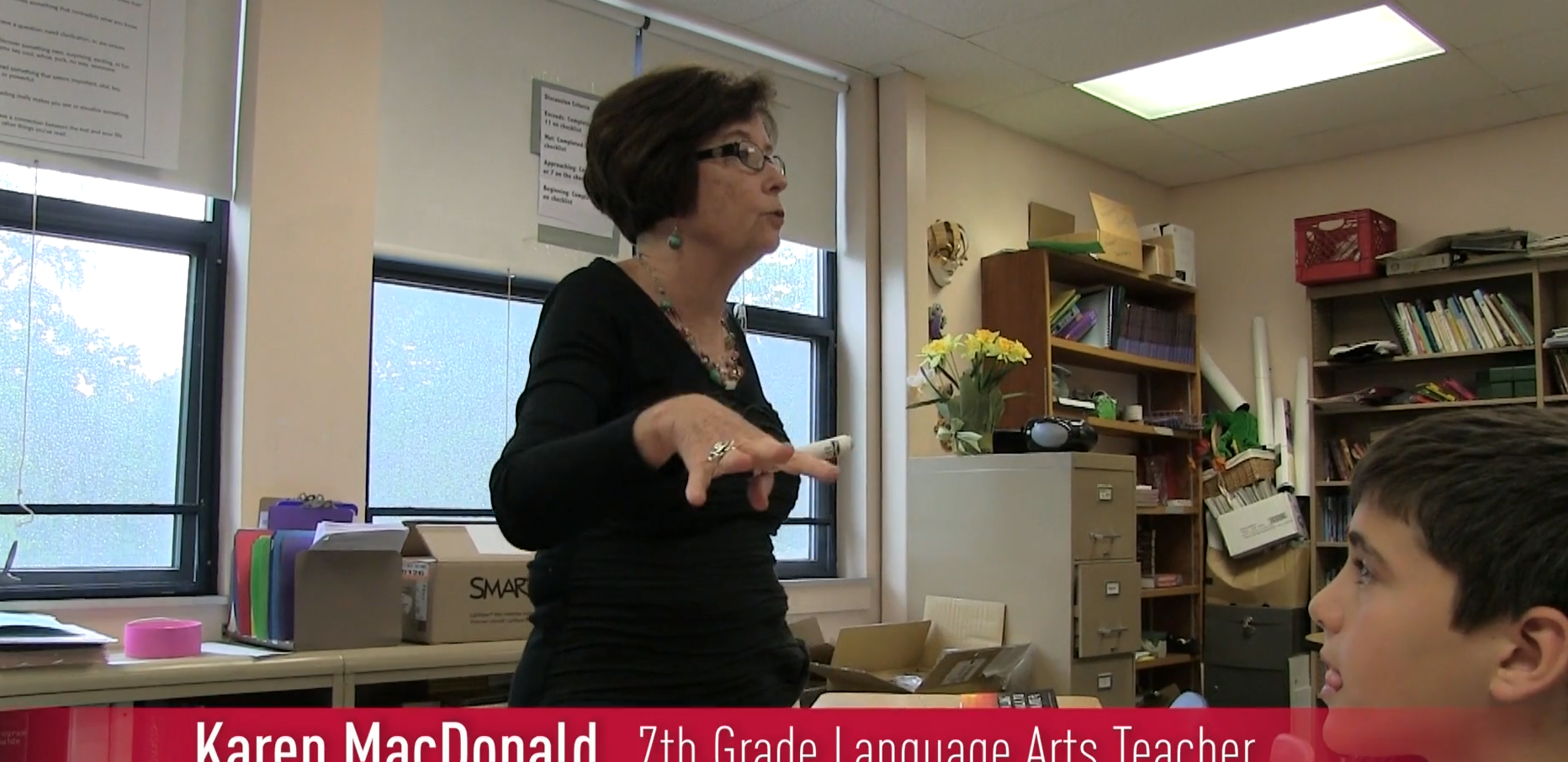 Watch how this middle school teacher supports her diverse students in reading complex texts, pairing fiction with nonfiction. How does this choice of compelling topics and culturally appropriate topics work students through a progression of increasingly complex tasks, or in other words: how does it work as a scaffold to build their skills in close reading? Watch how this middle school teacher supports her diverse students in reading complex texts, pairing fiction with nonfiction. How does this choice of compelling topics and culturally appropriate topics work students through a progression of increasingly complex tasks, or in other words: how does it work as a scaffold to build their skills in close reading?
|
|
VIDEO: Labels and Drawing - Grades K-5 |
Watch this teacher's approach to combining labels with drawings. What makes this an effective and appropriate strategy for ELLs in grades K-5?

|
|
VIDEO: Writing to learn - Grades PK-1 |

Watch this video on Writing to Learn. How would you apply this in your classroom? Describe any modifications you might make for ELLs. |
|
WEBSITE: Resources for Tiering With the Florida Multi-tiered System of Supports |
|
|
| Module 9 |
Structured Discussions: Best Practices |
|
|
Blog Instructions |
|
|
Blog About and Share a Literacy Resource for Struggling Learners |

Whether a new literacy resource, a differentiated resource, a resource for inclusive classrooms, or one focused specifically on struggling readers, let's share a resource and talk about it in this blog.
- First, tell us why you chose the resource.
- Next, provide us with a link to the resource and a brief description of it.
- Explain how the resource works effectively, or has the potential to work effectively, with struggling readers.
|
|
| Module 10 |
Phonological Awareness |
|
|
21st Century Resources |
|
|
Video: A Phonics Lesson With the "OW" Sound |
Watch how this video teaches the "ow" sound. What would this look like in your classroom? Would you need to modify it for ELLs, and if so how? Prepare to discuss in the forum that follows. |
|
Wiki Instructions |
This resource walks you through the Wiki process. |
|
| Module 11 |
Best Practices in Writing for ELLs |
|
|
Critical Literacy Resources |
|
|
| Module 13 |
Migration To a Standards-based Curriculum |
|
|
VIDEO: Co-Teaching for ESOL Instruction - All Grades |
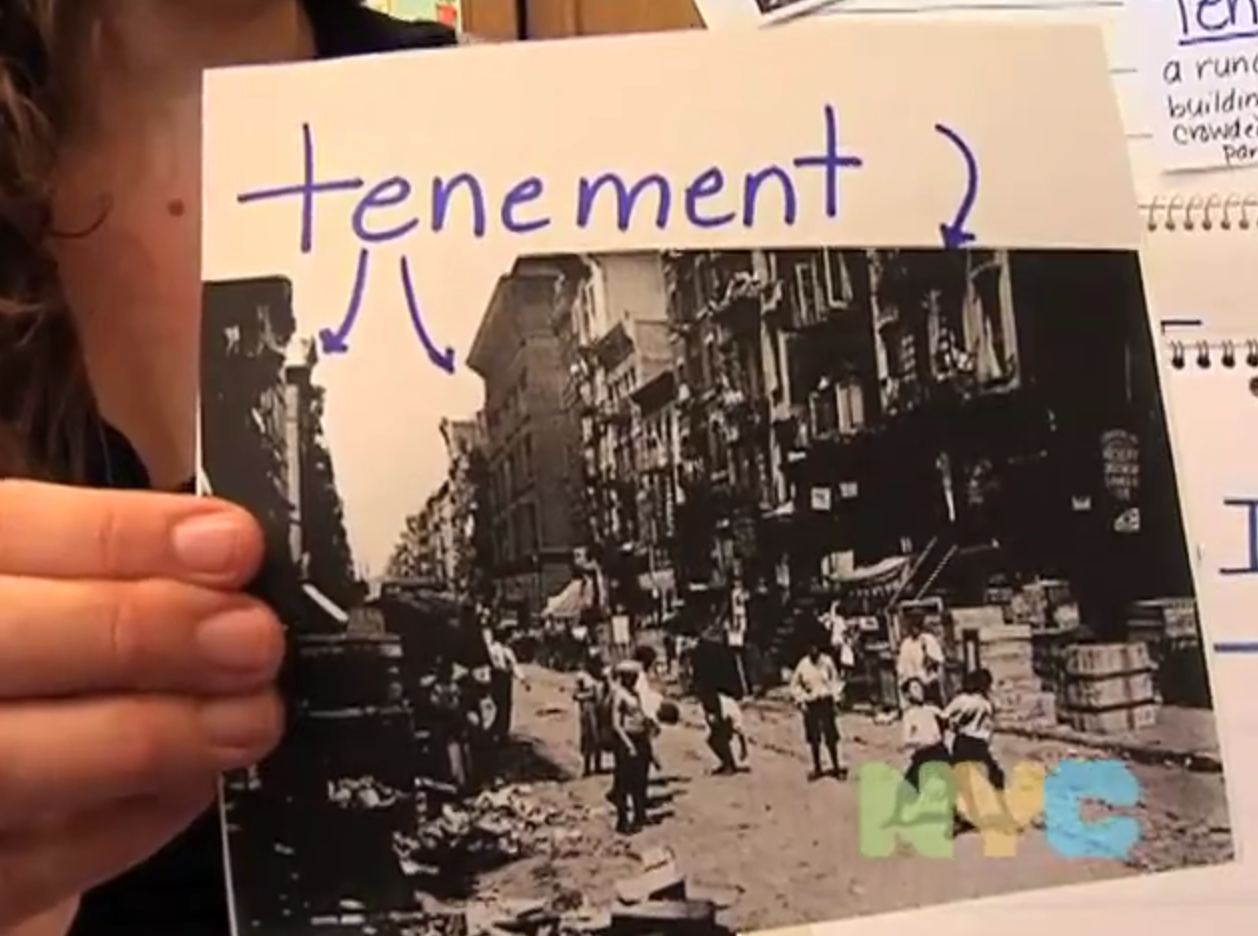 What is the process these teachers use to co-teach? How does it mirror your own efforts at co-teaching, and what can you take away from this in planning for ESOL instruction? What are the familiar elements of ESOL instruction they are using? Address any or all of these in the discussion forum that follows. What is the process these teachers use to co-teach? How does it mirror your own efforts at co-teaching, and what can you take away from this in planning for ESOL instruction? What are the familiar elements of ESOL instruction they are using? Address any or all of these in the discussion forum that follows.
|
|
| Module 14 |
Building Reading Fluency of ELLs |
Have you ever watched students struggle with what you know to be a great book, just perfect for their age and development? Without fluency, the world of imagination, humor, and drama contained in the finest books is no more than a tangle of words.
One definition of fluency is the ability to read aloud expressively and with understanding. When fluent readers read aloud, the text flows as if strung together like pearls on a necklace, rather than sounding halting and choppy.
Here are some strategies to help second through fifth graders make important gains in this area. Before you use these techniques, however, you should assess your students and determine their needs. If several students need help, you may want to create whole-class lessons based on choral reading or reader's theater. If there are only a few students, you may decide to work with them in small groups.
1. Model Fluent Reading
In order to read fluently, students must first hear and understand what fluent reading sounds like. From there, they will be more likely to transfer those experiences into their own reading. The most powerful way for you to help your students is to read aloud to them, often and with great expression. Choose selections carefully. Expose them to a wide variety of genres including poetry, excerpts from speeches, and folk and fairy tales with rich, lyrical language — texts that will spark your students' interests and draw them into the reading experience.
Following a read-aloud session, ask your students: "After listening to how I read, can you tell me what I did that is like what good readers do?" Encourage students to share their thoughts. Also, ask your students to think about how a fluent reader keeps the listener engaged.
2. Do Repeated Readings in Class
In their landmark book, Classrooms That Work, Patricia Cunningham and Richard Allington stress the importance (and I agree) of repeated readings as a way to help students recognize high-frequency words more easily, thereby strengthening their ease of reading. Having students practice reading by rereading short passages aloud is one of the best ways I know of to promote fluency.
For example, choose a short poem to begin with, preferably one that fits into your current unit of study, and transpose it onto an overhead transparency. Make a copy of the poem for each student. Read the poem aloud several times while your students listen and follow along. Take a moment to discuss your reading behaviors such as phrasing (i.e. the ability to read several words together in one breath), rate (the speed at which we read), and intonation (the emphasis we give to particular words or phrases).
Next, ask your students to engage in an "echo reading," in which you read a line and all the students repeat the line back to you. Following the echo reading, have students read the entire poem together as a "choral read." You will find that doing group readings like these can be effective strategies for promoting fluency because all students are actively engaged. As such, they may be less apprehensive about making a mistake because they are part of a community of readers, rather than standing alone.
3. Promote Phrased Reading in Class
Fluency involves reading phrases seamlessly, as opposed to word by word. To help students read phrases better, begin with a terrific poem. Two of my students' favorites are "Something Told the Wild Geese" by Rachel Field, and "Noodles" by Janet Wong. (See resources below.)
After selecting a poem, write its lines onto sentence strips, which serve as cue cards, to show students how good readers cluster portions of text rather than saying each word separately. Hold up strips one at a time and have students read the phrases together. Reinforce phrased reading by using the same poem in guided reading and pointing to passages you read as a class.
4. Enlist Tutors to Help Out
Provide support for your nonfluent readers by asking tutors — instructional aides, parent volunteers, or older students — to help. The tutor and the student can read a preselected text aloud simultaneously. By offering positive feedback when the reader reads well, and by rereading passages when he or she struggles, the tutor provides a helpful kind of one-on-one support. The sessions can be short — 15 minutes at most. Plus, if you provide tutors with the text that you plan to use in an upcoming group lesson, you can give your nonfluent readers a jump start prior to the next lesson.
5. Try a Reader's Theater in Class
Because reader's theater is an oral performance of a script, it is one of the best ways to promote fluency. In the exercise, meaning is conveyed through expression and intonation. The focus thus becomes interpreting the script rather than memorizing it.
Getting started is easy. Simply give each student a copy of the script, and read it aloud as you would any other piece of literature. (See script resources below.) After your read-aloud, do an echo read and a choral read of the script to involve the entire class. Once the class has had enough practice, choose students to read the various parts. Put together a few simple props and costumes, and invite other classes to attend the performance.
For the presentation, have readers stand, or sit on stools, in front of the room and face the audience. Position them in order of each character's importance. Encourage students to make eye contact with the audience and one another before they read. Once they start, they should hold their scripts at chest level to avoid hiding their faces, and look out at the audience periodically.
After the performance, have students state their names and the part that they read. You might also want to videotape the performance so that you can review it with students later. In doing so, you will show them that they are, indeed, fluent readers.
Poetry Books for Repeated and Phrased Readings
Books for Reader's Theater
- A Reader's Theatre Treasury of Stories, by Win Braun
- Presenting Reader's Theatre, by Caroline Feller Bauer
- Reader's Theatre for Beginning Readers, by Suzanne I. Barchers
- The Best of Reader's Theatre, Vols. I and II, by Lisa Blau
|
|
| Module 15 |
Social and Academic Language: Vocabulary and Reading |
|
|
RESOURCE: Creative Use of Domain Specific Words |
Use this C-Palms resource to teach domain-specific words. |
|
VIDEO: Group Work and Group Discussions - Grades K-5 |
Structures, protocols, modeling, and guidance build students' collaboration and discussion skills. |
|
VIDEO: Engaging Students in Collaborative Academic Discussions - Grades 3-8 |
Students in Erin Daly's fifth-grade class at PS 36 in Bronx, NY, engage in a jigsaw protocol to deepen their understanding of the novel Esperanza Rising by Pam Munoz Ryan and the Universal Declaration of Human Rights. |
|
| Module 16 |
ESOL Planning Template |
|
|
| Module 17 |
Grouping to Differentiate With ELLs in Mind |
|
|
| Module 19 |
Ell Instruction in All Content Areas |
|