Module 8
Participants will understand and apply knowledge of the socio-cultural, socio-political, and psychological variables that constitute differentiated reading instruction for all students through all content areas. Through an understanding of the stages of language progression and proficiencies within the English language for ELLs, participants will learn how to apply leveled instruction to increase language proficiency among students. The factors that impede student reading, characteristics of language and cognitive development, and overall language proficiencies will be effectively differentiated using age and grade appropriate methods. Participants will select and use developmentally appropriate tools, materials, and resources to address sociocultural and linguistic differences as they import to planning and instruction. Participants will embed increased use of complex print and digital text sources into assessments, scaffolding techniques, and re-teaching opportunities for individual and small group instruction. Differentiation will include scaffolding reading instruction for struggling learners in all six of the reading components, as well as for English language learners at various levels of language proficiencies. Participants will be taught how to apply student progress monitoring and use of data to design, plan, and implement a differentiated curriculum that includes research-based approaches for comprehension, oral language, phonological awareness, phonics, fluency, vocabulary, higher order thinking to further critical reading among students.
Course Outcomes:
Design and implement differentiated lessons with strategy reflective of an understanding and application of socio-cultural, socio-political, and psychological variables to differentiation.
- Apply design principles to grouping and classroom environment.
- Use online and print tools for differentiation such as learning profiles, interest surveys and tiered questioning.
- Use research-based strategy to differentiate for writing development and to reinforce text comprehension.
- Summarize allowable and appropriate instructional accommodations as specified in students’ IEP or 504 Plans.
- Modify assessments for students with cognitive disabilities without interrupting rigor, high expectations, and opportunities for achievement as they reflect grade appropriate levels of access to general education.
- Design, re-design, scaffold, and acquire new strategy to develop lessons with using research-based, effective methods for differentiation in instruction and assessment of students.
- Use and scaffold with learning profiles, student-facing scaffolds, organizers, interest surveys, cognitive-friendly learning materials, tiered questioning prompts, and other student "hooks" for rigorous learning and assessment.
Section outline
-
Module 8
Tiering and Scaffolding Reading, Writing, Speaking, Listening
-
CompletionStudents mustView
-
CompletionStudents mustViewMake forum posts: 1
-
CompletionStudents mustView
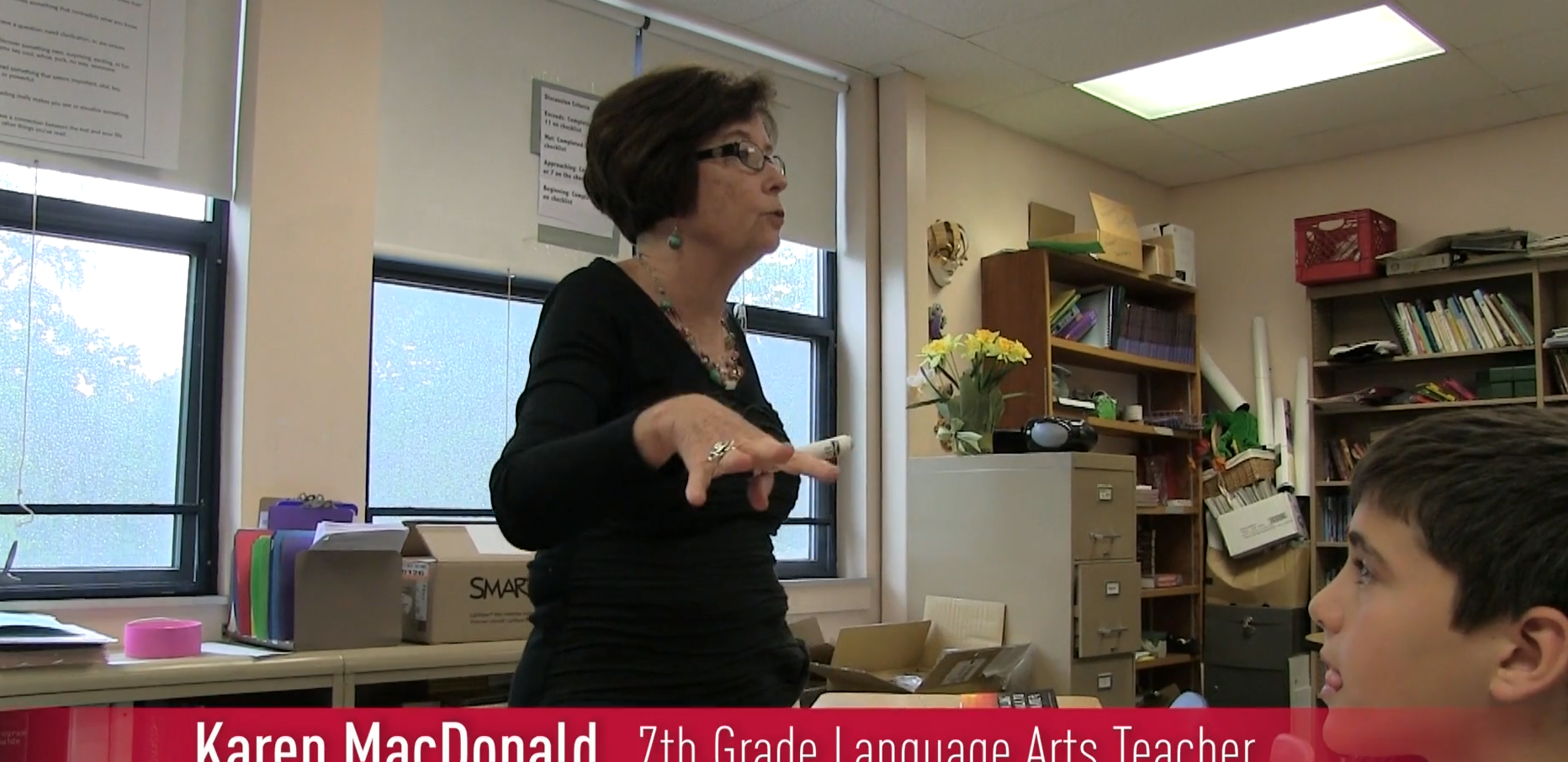 Watch how this middle school teacher supports her diverse students in reading complex texts, pairing fiction with nonfiction. How does this choice of compelling topics and culturally appropriate topics work students through a progression of increasingly complex tasks, or in other words: how does it work as a scaffold to build their skills in close reading?
 -
CompletionStudents mustView
Watch this teacher's approach to combining labels with drawings. What makes this an effective and appropriate strategy for ELLs in grades K-5?

-
CompletionStudents mustView

Watch this video on Writing to Learn. How would you apply this in your classroom? Describe any modifications you might make for ELLs.
-
CompletionStudents mustMake forum posts: 1
-
CompletionStudents mustView

-