Theories of Language Acquisition and Differentiation for ELLs
x
2. The Stages of Language Acquisition and Differentiation
Language Acquisition and Differentiation
Strategies and Stages
Stage 1: Pre-production Students take in the new language silently, sort of in the background to assimilate it. While they don’t speak it, they are assimilating it and this period can last for several weeks. Reinforce listening comprehension through read-alouds and songs/music. Speak slowly, use shorter words, phrases and sentences for ease and expediency of understanding. Demonstrate the meaning of new words and how to keep records of words for future use through vocabulary journals, acting out certain phrases with, “For example, watch as I…” using gestures and pointing. Model correct language use, and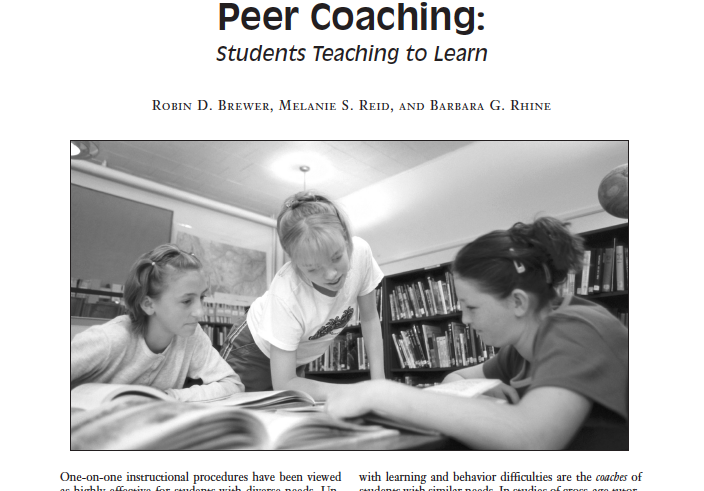 rather than correct simply rephrase correct use of words and phrases. Pair students up with English-speaking peers to help interpret and aid academically when possible.
Stage 2: Encourage pointing, and require repeating Small groups, or buddy groups, to have peer discussions, look up answers to questions, or write short responses and share aloud in class. Keep questions at “yes” or “no.” Encourage repeating of phrase and sentences; singing, rhyming, repetition for younger students. Continue to model correct usage of the language. Use and hold academic discussions with academic vocabulary. Teach academic vocabulary, model its use and pre-teach academic vocabulary for challenging text. Provide culturally-friendly visuals to reinforce concepts when possible.
Stage 3: Use charts and graphs to display information. Introduce graphic organizers and help students chunk information for writing, oral response, or preparing answers to questions. Have students re-tell stories or experiences Encourage home-school connections by requiring students to read aloud at home and describe events in the home language to reinforce understanding. Use fill-in-the-blanks for writing activities, cloze for vocabulary in context teaching, and chunk writing assignments requiring students to place information in categorically, pulling together later. Story maps are good examples, allowing students to think through the elements of literature, and pull them together through whole writing pieces with teacher or peer assistance. Employ think-pair-share activities to allow for processing of new language, vocabulary, and to reinforce understanding of concepts through clarification of, and discussion with, peers. Ask for clarification on responses that are not understood, allowing for sufficient wait-time. Rephrase as appropriate, and have students repeat the phrase back.
Stage 4: Ask students to agree or disagree with opinions or when discussing text. Teach, have them use, and model the use of advanced academic language that include opinion, persuasion/argument, and evidence. Teach students when and how to use formal and 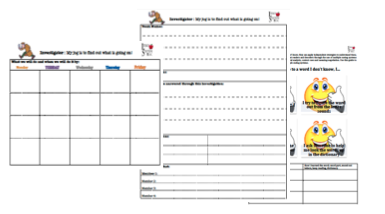 informal English, and what instances are appropriate and non-appropriate Have students prepare and give presentations, interspersed with language prompts for them to complete. Use and keep visible for reference, writing and speaking prompts. Correct errors within the realm of what was taught, otherwise students can still become overwhelmed. Correct as appropriate, but not too frequently; rather, speak correctly and have them repeat. Introduce and use key words related to text, and teach academic vocabulary directly. Use graphic organizers and thinking maps.
Stage 5: Teach students to use dictionaries, pictionaries, and thesaurus independently to identify the meaning of new/unknown words. Teach students how to use context to identify the meaning of new/unknown words. Introduce and teach idioms and cognates with examples and non-examples. Introduce more corrective feedback in syntax, pragmatics, pronunciation and other language elements. Develop language goals with students. Teach etymology of words or word families. Create assessments that allow for opportunities to articulate answers in English.
Stage 6: Teach advanced vocabulary to include the use of antonyms, synonyms, advanced use of a thesaurus and dictionary. Teach effective note-taking through use of a template, such as Double-Column notes, or Frayer Notes. Other ways to differentiate include scaffolding instruction so that students are eased into challenge, and so that they lean into it, by gradually giving them more accountability and responsibility for learning. Giving them tasks at their level, while increasingly heightening the challenge of the tasks, is the way to scaffold so that they receive challenge at an appropriate pace that will expedite academic progress. Asking questions for example, would increasingly become more “what if” centered than, “what” and so forth. Rather than one-word yes or no answers, hold them to shorter more descriptive answers. Eventually, in the fluent stages, have them discuss opinions, and show evidence of their learning.
Other Differentiation Techniques
Scaffolding is about making instruction appropriate, within the students’ grasp, and meaningfully engaging. Use of cognates is another way to acclimate second language learners to the English language as they draw as much meaning from context as possible. Provide students with a list of common cognates for reference. Teachers can also point them out explicitly in every day speech, or as opportunities arise within the context of instruction.
Explicit vocabulary instruction is probably the best way we can accelerate students’ academic achievement overall, especially for ELLs. While the push of the Common Core, and many state standards that have aligned to the Common Core, is for learning in context (looking at words within words, whole sentences and paragraphs to unlock new/unknown word meanings), ELL students need focused and explicit vocabulary instruction, especially prior to reading text. Tiered Questions
Using tiered questions, or questions scaffolded by complexity (intentionally) can keep ELL students engaged as more questions are asked the build upon the former. Tiering questions is a way to achieve this. Building them into lessons by differentiating them, for example grouping students and holding them responsible for answers according to their groups. Asking questions throughout each lesson allows them to practice their thinking ahead of time, while better preparing them for assessments when they must think on their own. Tailor questions for each stage of language accordingly.
Example of Tiered Questions: Early Production: yes/no, followed by short phrases. Ask students to point to pictures, books, or objects around the room to depict response and understanding. Speech Emergence: ask questions for short response, such as short constructed response or short answer questions. A one-word response at this phase is no longer appropriate. Why and how questions are appropriate.
Intermediate and Advanced Fluency: Hold students accountable at this stage for longer and more elaborate answers in any setting: whole class, peer-to-peer, student-to-teacher, small group. What might have happened if? And, “Why did you think that?” Are good questions to ask at this stage. Advanced Fluency: Students can retell stories, events, story elements, main ideas, and even make inferences. There continues to be evidence of increased educational attainment when English fluency increases among bilingual and ELL students, particularly when differentiation is used to scaffold and increase achievement (Strand and Demie, 2005; Demie and Strand, 2006; Tomlinson, 2008).
See the Course Objectives | Research | Materials folder for tools and guides that support these strategies and techniques.
References and Other Resources:
Hill, J. D., Bjork, C. (2008). Classroom Instruction That Works with English Language Learners: Facilitator’s Guide. Alexandria, VA: ASCD. Native American Literature http://www.indigenouspeople.org/natlit/index.html
Multicultural Resources http://curry.edschool.virginia.edu/go/multicultural/
Multi-Language Activities and Projects http://www.kidlink.org/