Best Practices in Writing for ELLs
x
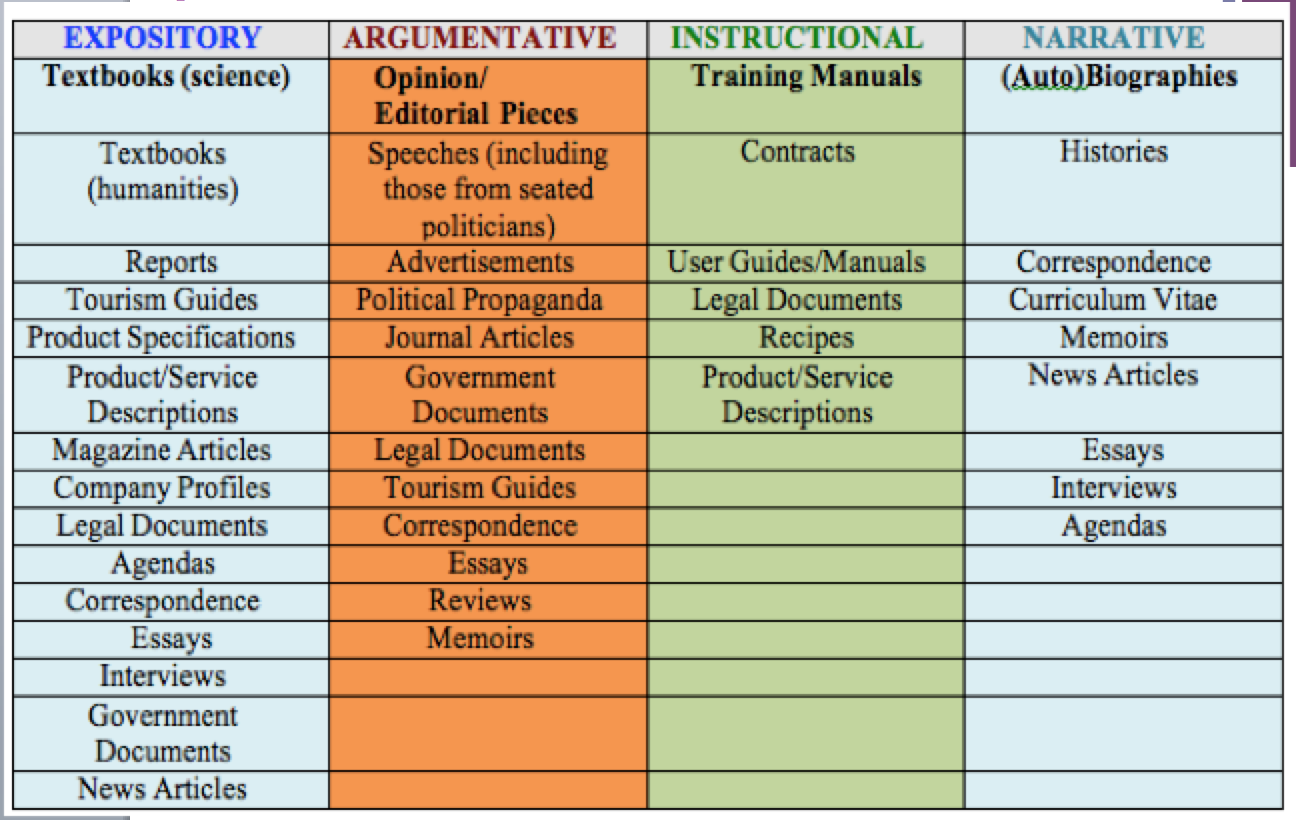
2. The 4 Non-fiction Writing Genres
The National Assessment of Educational Progress (NAEP) recommends that 40 percent of writing be devoted to explain and support, and 20 percent to convey and convince an experience.
Arguments are used to:
- Change a reader's point of view
- Affect change
- Inspire action
- Promote a concept or idea
- Defend a claim
- Explain a position
- Explain a conclusion
- Make a statement or claim about a literary work
- Defend an interpretation
Explanatory writing is about information and accuracy. The purpose is to increase subject knowledge, helping readers deepen comprehension about concepts, procedure, process and writing about these subjects requires explicit, clear information backed up with plenty of evidence. What are...How big...What is __ used for? How do operate and why? How does this work? Why do they....?
Writers explore types of genre, large ideas from primary and secondary sources like branches of governmental functions, genre studies and so forth. Techniques within this writing genre include:
- Development of a controlling idea
- Selecting and incorporating examples
- Using facts and details
- Naming
- Defining
- Distinguishing
Narrative writing is probably the most creative of the three text types for writing, because narrative conveys real or imaginary experiences. Time is used as the deep structure, and as long as authors can effectively and creatively portray a sense of time, either implied or direct, readers can become quite engaged.
Purposes for narrative writing include:
- To inform
- To instruct
- To persuade
- To entertain
Instructional writing is the most technical of the text types. Instructional conveys information on steps, procedures, and how-to guidance.
- User guides
- Legal documents
- Technical manuals
Instructional writing conveys instructional details. Students must understand how to write constructively, and sequentially.