Grouping to Differentiate With ELLs in Mind
| Site: | Literacy Solutions On-Demand Courses |
| Course: | Methods of Instruction for ELLs, Grades K-12 - No. ELL-ED-112 |
| Book: | Grouping to Differentiate With ELLs in Mind |
| Printed by: | Guest user |
| Date: | Wednesday, July 15, 2026, 3:51 AM |
Description
x
1. Cooperative Learning Basics
Cooperative Learning has a research base with supported effectiveness. Peer collaboration and active listening, teaming, community, cross-curricular connections, and cognitive-friendly differentiation are among the attributes of effective cooperative learning (Beers & Probst, 2007; Immmordino-Yang, 2008; Ruckdeschel, 2010). In cooperative learning groups, students often take on roles to contribute to completion of a team project, while following house rules to work cooperatively along the way.
The overall principles of cooperative learning include the following:
- Heterogeneous Groups: Students work in mixed ability groups from low to high achieving, and mixed ethnically to improve interpersonal and social relations, communication, and thus improved academic performance (Lou, 1996 In: Unrau, 2008).
- Group Accountability: Students work in teams toward a common, specific goal, with each member contributing equally in the form of a product, performance task, or unit outcome.
- Positive interdependence: Students work toward group goals with a group reward at the end, and all are accountable via team interdependence. Activities are structured so that all members take equal responsibility for the end product, and so that none can succeed solely on the effort of another.
- Individual Accountability: In addition to group accountability, cooperative learning has individual accountability designed in. Each member is held accountable for individual participation and effort toward a final team product. Students are tested individually on the requisite knowledge gained, and for individual effort toward the common team goal.
Cooperative Learning Social Roles (see Course Objectives | Research | Materials folder for printable resource)
Students work actively and enthusiastically in cooperative learning groups through simultaneous interaction with other students. But they aren't learning on their own; quite the contrary, there is also a great deal of positive teacher-student and student-to-student peer interaction, where gains are made from one student to another, and with individual student-teacher interactions. Teams don’t compete; rather, they all complete projects that might vary or be differentiated with the same purpose or goal in mind. All group outcomes are completed collaboratively in teams to contribute to a final group project while working toward a whole class objective. Within each team, success is interdependent with each member working equally toward a common purpose.
Cooperative Learning Signals (see Course Objectives | Research | Materials folder for printable resource)
Accountability and Assessment
Individual accountability is based upon individual contribution to a team outcome. It can take many forms depending on what is taught, what the objectives are, and what cooperative learning methods are used. Each student for example, might take an individual test to evaluate learning, with a team grade calculated by averaging the individual quizzes. Or each student might be given an individual grade that hinges on contribution and the team’s final outcome, using an individual rubric and a group rubric.
Cooperative Learning Paired Evaluation (see Course Objectives | Research | Materials folder for printable resource)
Equal participation is important in cooperative learning environments, and is often challenged by students who do the lion’s share of work, and those who rely upon the effort of others for various reasons. When tasks and outcomes are structured, such as in assigning roles, so that all students contribute equally, cooperative learning groups are most successful. For example, rather than assign one specific topic to be discussed, participation can be assured by requiring that each student participate. Students would use a protocol and checklist to ensure this participation, and each group would rate its group using a rubric. This provides for individual and group accountability.
Here are some useful implementation tools that aid in cooperative learning (see the Course Objectives | Research | Materials folder for more):
- Oral Reading Rubric
- Active Listening Checklist
- Active Listening Checklist - 2
- Paraphrasing for Comprehension with Peers
- Literature Circles: Passage Master
- Literature Circles: Illustrator
- Literature Circles: Illustrator/Artist
2. Small and Flexible Groups
Small and Flexible Groups
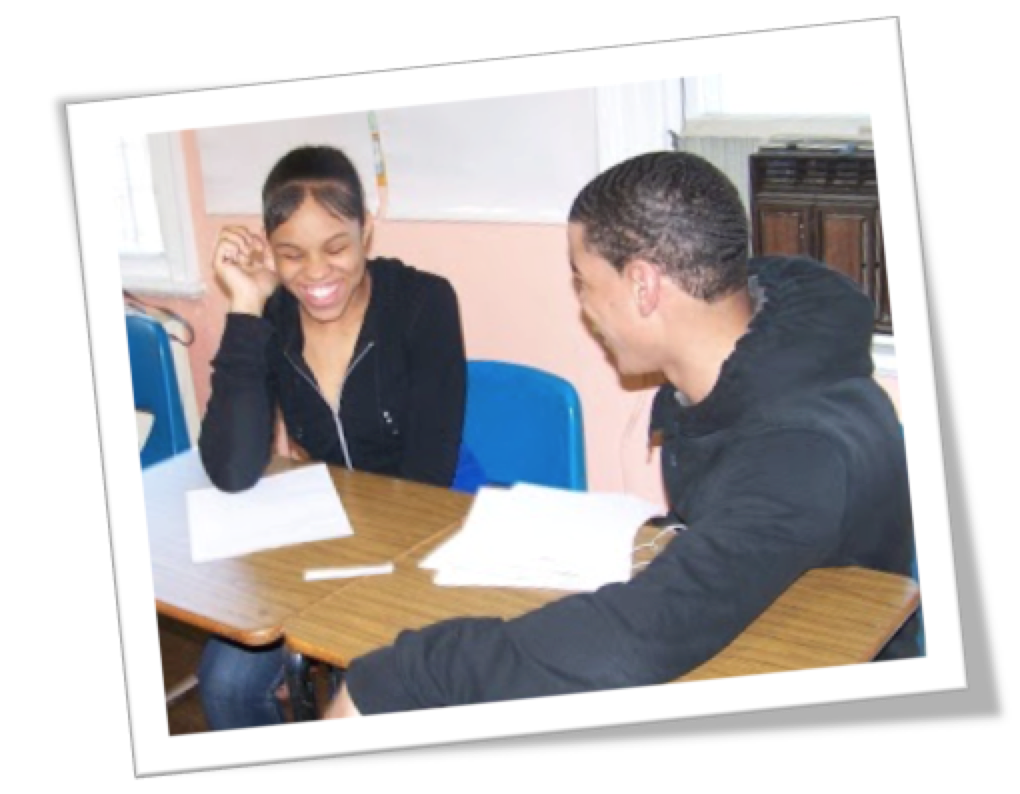 Teachers can organize and facilitate groups based on student readiness in response to diverse learning needs through scaffolding applied best in small groups. Students would therefore be placed with materials that are at their own level of functioning, offering support to help them achieve a learning standard or master a specific skill. Students who perform at or above grade level might also need small and flexible grouping in order to allow them opportunities to challenge or expand on activities. Decisions for small groups are typically made in the following instances:
- When some students need additional instruction or time on task
- Students need additional support, help or scaffolding
- Higher performing students need prep time or need extension activities for independent learning
- Students have specific interests or need to make selections for assignments to result in group placement
- Learning style inventories indicate specific learning preferences for challenging tasks. Small grouping allows for students to be placed within activities that accommodate learning styles and thus allow for enhanced learning and success.
Marzano's Informal, Formal, and Base Groups
Marzano (2001) recommends that cooperative learning groups be used as a base for instruction. Base groups can be organized by grouping patterns that include the following:
Informal groups: pair-share, turn-and-talk groups that last a few minutes and are used to scaffold, reflect within a lesson about a lesson. These groups focus student attention while allowing them to more deeply process information through focused peer discussion.
Formal groups are longer term groups that allow students time to thoroughly process information, complete assignments and performance tasks. These are planned in advance to achieve positive interdependence among students, collaborative processing of information, reinforcement of social skills, and group accountability. Formal groups can include:
- assignment completion
- project planning
- project completion
- peer conferences
- student peer coaching
Base groups are the longest term groups that allow students time to follow through on throughout the school year with the same peers. They can be used to accomplish routine tasks, provide on-going support, progress monitor, and complete collaborative long-term activities. Activities in base groups can include:
- routine tasks
- planned activities
- running of errands
- five minute meetings to greet and meet, check in, or sign up for various activities, review homework, help with classroom chores
Other Grouping Possibilities:
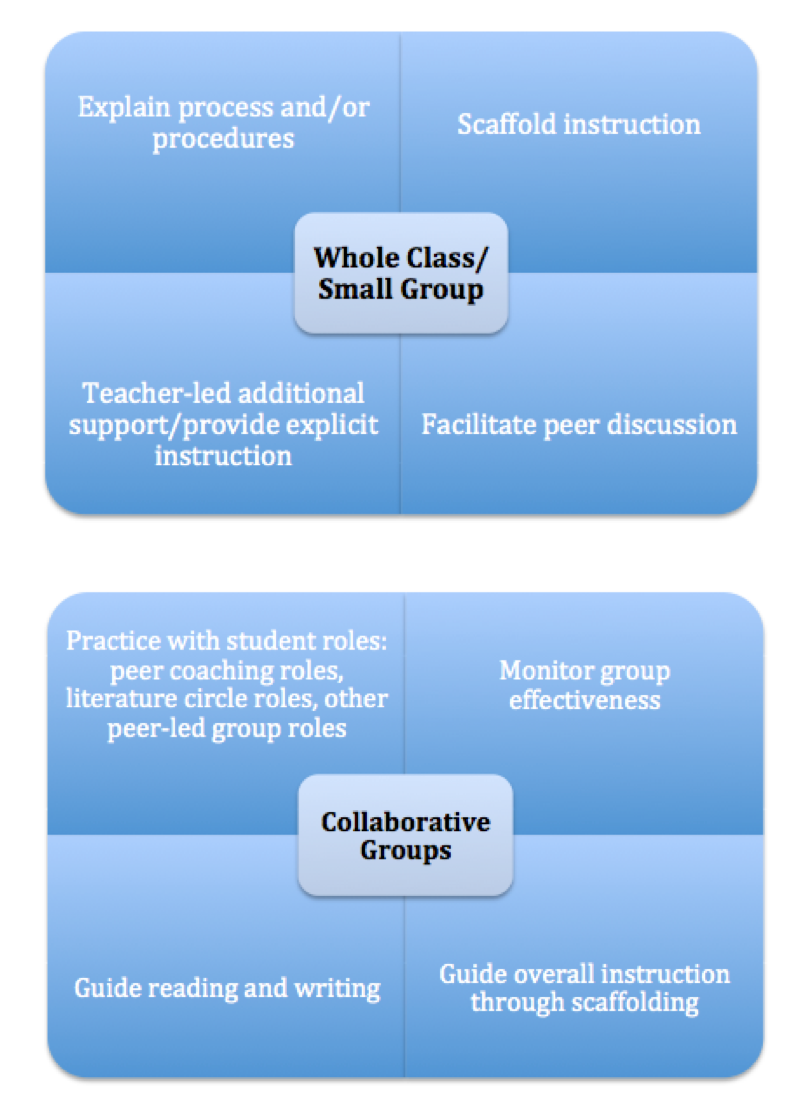
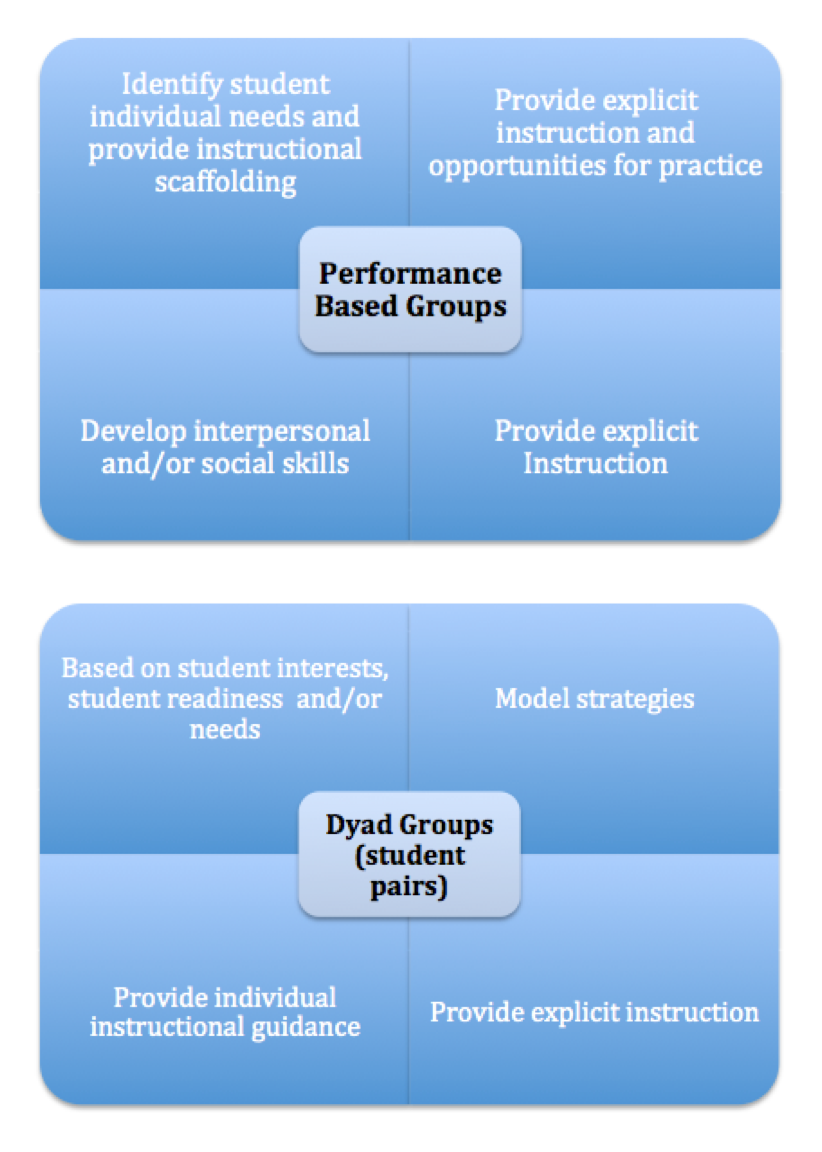
3. Grouping With Data
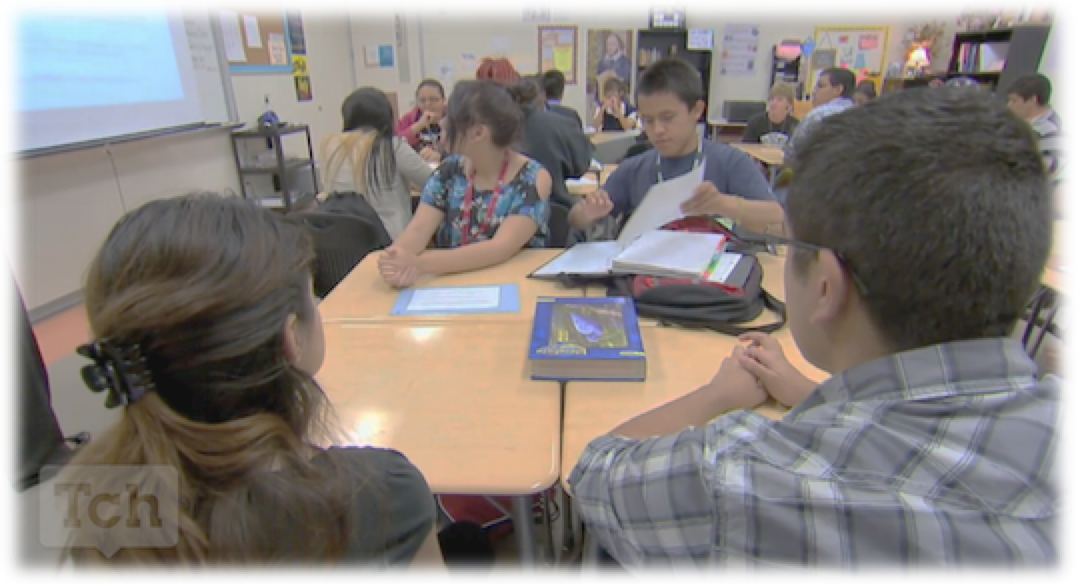
When grouping students, use formative assessment data to monitor progress with (Tomlinson, 2003; 2007). Formative assessment data used to differentiate instruction with can include the following:
- Anecdotal data gathered from reflective and collaborative activities, where students are communicating with one another while performing tasks, and completing activities. Teachers can use lists and charts to record this information on.
- Summaries and self-reflections where students articulate understanding, make sense of what they have read, make personal life connections through their own experiences, and communicate metacognitively about what they read through writing. Teachers look for content-specific language, and connections to and among concepts taught.
- Graphic organizers and strategy guides where students organize information, make connections among concepts and relationships by organizing their ideas into organizational templates. Reviewing these templates helps teachers understand the thinking process students' apply to arrive at answers and make sense of information with. It also communicates the thinking behind a final product, and to what extent that thinking was critical and analytical.
- Visual Representations of Information with students using visuals and pictures to connect ideas and remember information with. Noting visual information that students use to articulate understanding tells teachers what their learning style preferences are, and to what extent pictorial representations work into their overall ability to retain and make sense of information.
- Exit cards or exit sticky notes are useful formative assessment vehicles that articulate culminating understanding in follow-up to a lesson, or as preparation for review and background knowledge.
Differentiated Group Lesson Example
First 10 to 15 minutes of class:
- Lesson overview, mini-lesson, culling students for prior knowledge via a class interactive KWL (Know, Want to know, Learn) or discussion focused on prior knowledge related to the upcoming lesson or content.
- Students participate in a teacher-led lesson with the same content but differentiated instructional pacing or scaffolded support specific to students' needs. For example, some students might draw out their ideas and caption them. Others may write short responses.
- Other students work in pre-assigned groups for independent study or on assigned cooperative learning/collaborative tasks with peer partners.
- Students may be in different places, with some reviewing work from previouos tasks and making adjustments, others engaging in peer review for editing and revision, some conferring with the teacher in a teacher-led group, and others working ahead of on scaffolded activities to catch up.
- Students work to complete assignments at staggered times and work effectively at different places within the same assignment with varying start and finish times.
More Considerations for Grouping
Develop peer leaders for each group and rotate this role so that all, or most, have an opportunity to experience peer leadership:
- Develop problem solvers in a similar way, jigsawing this opportunity for all students.
- Consider grouping for endurance levels, integrating high energy students with lower energy for a healthy mix of group synergy.
- Consider background experience and other languages spoken when making placement decisions.
- Consider cognitive abilities, but do not base groups solely using cognitive criteria.
- Consider creative and artistic talents when placing students in groups.
- Keep varied levels of expectations for task completion; allow students to finish and start at various times that coincide with their abilities, passion for the project, and time needed overall for completion.
- Create environments where all learners can experience some type of success.
- Use and make available reading and resource materials at multiple reading levels throughout multiple genre, such as pairing themes with fiction and non-fiction for example.
- Use small groups to re-teach those in need of re-teaching.
Small groups were found to be as successful as one-on-one conferences (Greenwood, et al., 2003 in: Tobin & McInnes, 2008), particularly when instruction was focused on addressing phonics, decoding, and fluency in reading. When placing students in early reading groups consider the following:
- Flexile grouping
- Ongoing assessment and progress monitoring
- Multiple text availability at various reading levels
- Intensive one-to-one instruction in word-study with repeated readings to build fluency
- Group guided reading practice with a focus on student engagement
- In-class coaching and modeling of differentiated strategies for teachers
4. Group Management
Here are a few rules-of-thumb for responsible, effective group management:
- Keep the groups small
- Work or participate within the groups as you circulate them
- Take plenty of anecdotal notes and glean other formative data when circulating
- Remain flexible about how you place students, moving them as needed or shifting groups around depending on the group goals (project, assignment, or socially driven)
- Rotate or jigsaw groups to keep them lively
Differentiated Group Lesson Example:
First 10 to 15 minutes of class:
- Lesson overview, mini-lesson, extraction of prior knowledge from students via interactive KWL or discussion focused on prior knowledge related to the upcoming lesson or content.
- Students participate in a teacher-led lesson with same content but differentiated instructional pacing or scaffolded support specific to students' needs.
- Other students work in preassigned groups for independent study or on assigned cooperative learning/collaborative tasks with peer partners.
- Students may be in different places, with some reviewing work from previous tasks and making adjustments, others engaging in peer review for editing and revision, some conferring with the teacher in a teacher-led group, and others working ahead of on scaffolded activities to catch up.
- Students work to complete assignments at staggered times and work effectively at different places within the same assignment with varying start and finish times.
Marzano, R. J. (2003). What works in schools: Translating research into action. Alexandria, VA: Association for Supervision and Curriculum Development
Radencich, M. C., L. J. McKay, and J. R. Paratore, "Keeping Flexible Groups Flexible," 27-29.*
More Grouping Considerations
Develop peer leaders for each group and rotate this role so that all, or most, have an opportunity to experience peer leadership:
- Develop problem solvers in a similar way, jigsawing this opportunity for all students.
- As needed group by boys and girls
- Consider grouping for energy levels, integrating high energy students with lower energy for a healthy mix of group synergy.
- Consider background experience and other languages spoken when making placement decisions.
- Consider cognitive abilities, but do not base groups solely using cognitive criteria.
- Consider creative and artistic talents when placing students in groups
- Keep varied levels of expectations for task completion
- Create environments where all learners experienced some type of success
- Use and make available reading and resource materials (primary and secondary source documents for example) at multiple reading levels
- Create literacy centers with varied tasks designated to match students’ readiness, interest and learning style preferences
- Use small groups to re-teach those in need of re-teaching
Small groups were found to be as successful as one-on-one conferences (Greenwood, et al., 2003 in: Tobin & McInnes, 2008), particularly when instruction was focused on addressing phonics, decoding, and fluency in reading. When placing students in early reading groups consider the following:
- Flexible grouping
- Ongoing assessment and progress monitoring
- Multiple text availability at various reading levels
- Intensive one-to-one instruction in word-study with repeated readings to build fluency
- Group guided reading practice with a focus on student engagement
- In-class coaching and modeling of differentiated strategies for teachers
