Building Reading Fluency of ELLs
| Site: | Literacy Solutions On-Demand Courses |
| Course: | Methods of Instruction for ELLs, Grades K-12 - No. ELL-ED-112 |
| Book: | Building Reading Fluency of ELLs |
| Printed by: | Guest user |
| Date: | Wednesday, July 15, 2026, 3:51 AM |
Description
Have you ever watched students struggle with what you know to be a great book, just perfect for their age and development? Without fluency, the world of imagination, humor, and drama contained in the finest books is no more than a tangle of words.
One definition of fluency is the ability to read aloud expressively and with understanding. When fluent readers read aloud, the text flows as if strung together like pearls on a necklace, rather than sounding halting and choppy.
Here are some strategies to help second through fifth graders make important gains in this area. Before you use these techniques, however, you should assess your students and determine their needs. If several students need help, you may want to create whole-class lessons based on choral reading or reader's theater. If there are only a few students, you may decide to work with them in small groups.
1. Model Fluent Reading
In order to read fluently, students must first hear and understand what fluent reading sounds like. From there, they will be more likely to transfer those experiences into their own reading. The most powerful way for you to help your students is to read aloud to them, often and with great expression. Choose selections carefully. Expose them to a wide variety of genres including poetry, excerpts from speeches, and folk and fairy tales with rich, lyrical language — texts that will spark your students' interests and draw them into the reading experience.
Following a read-aloud session, ask your students: "After listening to how I read, can you tell me what I did that is like what good readers do?" Encourage students to share their thoughts. Also, ask your students to think about how a fluent reader keeps the listener engaged.
2. Do Repeated Readings in Class
In their landmark book, Classrooms That Work, Patricia Cunningham and Richard Allington stress the importance (and I agree) of repeated readings as a way to help students recognize high-frequency words more easily, thereby strengthening their ease of reading. Having students practice reading by rereading short passages aloud is one of the best ways I know of to promote fluency.
For example, choose a short poem to begin with, preferably one that fits into your current unit of study, and transpose it onto an overhead transparency. Make a copy of the poem for each student. Read the poem aloud several times while your students listen and follow along. Take a moment to discuss your reading behaviors such as phrasing (i.e. the ability to read several words together in one breath), rate (the speed at which we read), and intonation (the emphasis we give to particular words or phrases).
Next, ask your students to engage in an "echo reading," in which you read a line and all the students repeat the line back to you. Following the echo reading, have students read the entire poem together as a "choral read." You will find that doing group readings like these can be effective strategies for promoting fluency because all students are actively engaged. As such, they may be less apprehensive about making a mistake because they are part of a community of readers, rather than standing alone.
3. Promote Phrased Reading in Class
Fluency involves reading phrases seamlessly, as opposed to word by word. To help students read phrases better, begin with a terrific poem. Two of my students' favorites are "Something Told the Wild Geese" by Rachel Field, and "Noodles" by Janet Wong. (See resources below.)
After selecting a poem, write its lines onto sentence strips, which serve as cue cards, to show students how good readers cluster portions of text rather than saying each word separately. Hold up strips one at a time and have students read the phrases together. Reinforce phrased reading by using the same poem in guided reading and pointing to passages you read as a class.
4. Enlist Tutors to Help Out
Provide support for your nonfluent readers by asking tutors — instructional aides, parent volunteers, or older students — to help. The tutor and the student can read a preselected text aloud simultaneously. By offering positive feedback when the reader reads well, and by rereading passages when he or she struggles, the tutor provides a helpful kind of one-on-one support. The sessions can be short — 15 minutes at most. Plus, if you provide tutors with the text that you plan to use in an upcoming group lesson, you can give your nonfluent readers a jump start prior to the next lesson.
5. Try a Reader's Theater in Class
Because reader's theater is an oral performance of a script, it is one of the best ways to promote fluency. In the exercise, meaning is conveyed through expression and intonation. The focus thus becomes interpreting the script rather than memorizing it.
Getting started is easy. Simply give each student a copy of the script, and read it aloud as you would any other piece of literature. (See script resources below.) After your read-aloud, do an echo read and a choral read of the script to involve the entire class. Once the class has had enough practice, choose students to read the various parts. Put together a few simple props and costumes, and invite other classes to attend the performance.
For the presentation, have readers stand, or sit on stools, in front of the room and face the audience. Position them in order of each character's importance. Encourage students to make eye contact with the audience and one another before they read. Once they start, they should hold their scripts at chest level to avoid hiding their faces, and look out at the audience periodically.
After the performance, have students state their names and the part that they read. You might also want to videotape the performance so that you can review it with students later. In doing so, you will show them that they are, indeed, fluent readers.
Poetry Books for Repeated and Phrased Readings
- The Random House Book of Poetry for Children, selected by Jack Prelutsky
- Sing a Song of Popcorn: Every Child's Book of Poems, selected by Beatrice Schenk de Regniers, Eva Moore, Mary M. White, and Jan Carr
- Treasure Chest of Poetry, by Bill Martin, Jr., with John Archambault and Peggy Brogan
- The 20th Century Children's Poetry Treasury, selected by Jack Prelutsky
Books for Reader's Theater
- A Reader's Theatre Treasury of Stories, by Win Braun
- Presenting Reader's Theatre, by Caroline Feller Bauer
- Reader's Theatre for Beginning Readers, by Suzanne I. Barchers
- The Best of Reader's Theatre, Vols. I and II, by Lisa Blau
1. DI and Building Fluency
What Is differentiated instruction?
Differentiated instruction, also called differentiation, is a process through which teachers enhance learning by matching student characteristics to instruction and assessment. Differentiated instruction allows all students to access the same classroom curriculum by providing entry points, learning tasks, and outcomes that are tailored to students' needs (Hall, Strangman, & Meyer, 2003). Differentiated instruction is not a single strategy, but rather an approach to instruction that incorporates a variety of strategies.
Teachers can differentiate content, process, and/or product for students (Tomlinson, 1999). Differentiation of content refers to a change in the material being learned by a student. For example, if the classroom objective is for all students to subtract using renaming, some of the students may learn to subtract two-digit numbers, while others may learn to subtract larger numbers in the context of word problems. Differentiation of process refers to the way in which a student accesses material. One student may explore a learning center, while another student collects information from the web. Differentiation of product refers to the way in which a student shows what he or she has learned. For example, to demonstrate understanding of a geometric concept, one student may solve a problem set, while another builds a model.
When teachers differentiate, they do so in response to a student's readiness, interest, and/or learning profile. Readiness refers to the skill level and background knowledge of the child. Interest refers to topics that the student may want to explore or that will motivate the student. This can include interests relevant to the content area as well as outside interests of the student. Finally, a student's learning profile includes learning style (i.e., a visual, auditory, tactile, or kinesthetic learner), grouping preferences (i.e., individual, small group, or large group), and environmental preferences (i.e., lots of space or a quiet area to work). A teacher may differentiate based on any one of these factors or any combination of factors (Tomlinson, 1999).
How is it implemented?
Implementation looks different for each student and each assignment. Before beginning instruction, teachers should do three things:
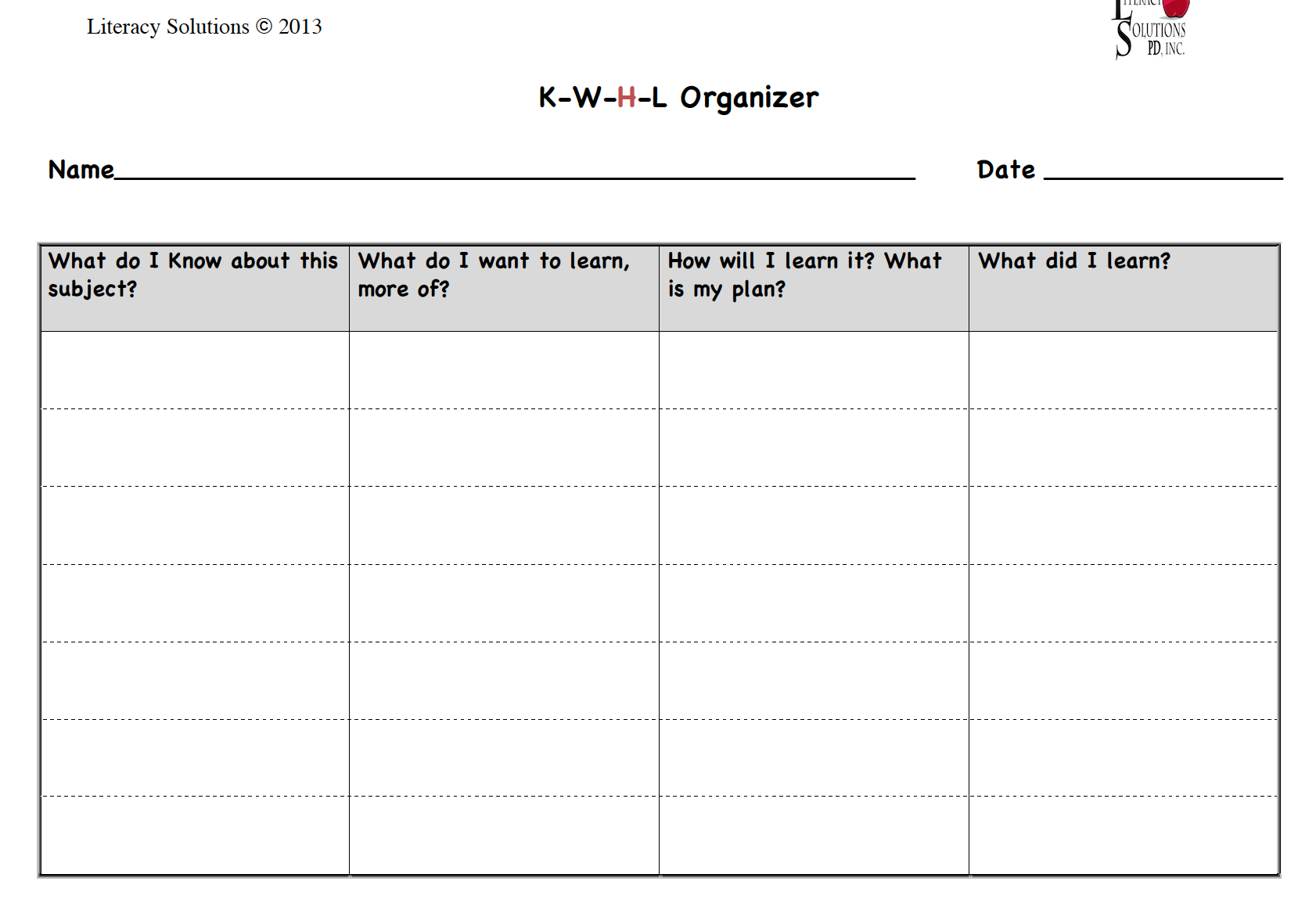
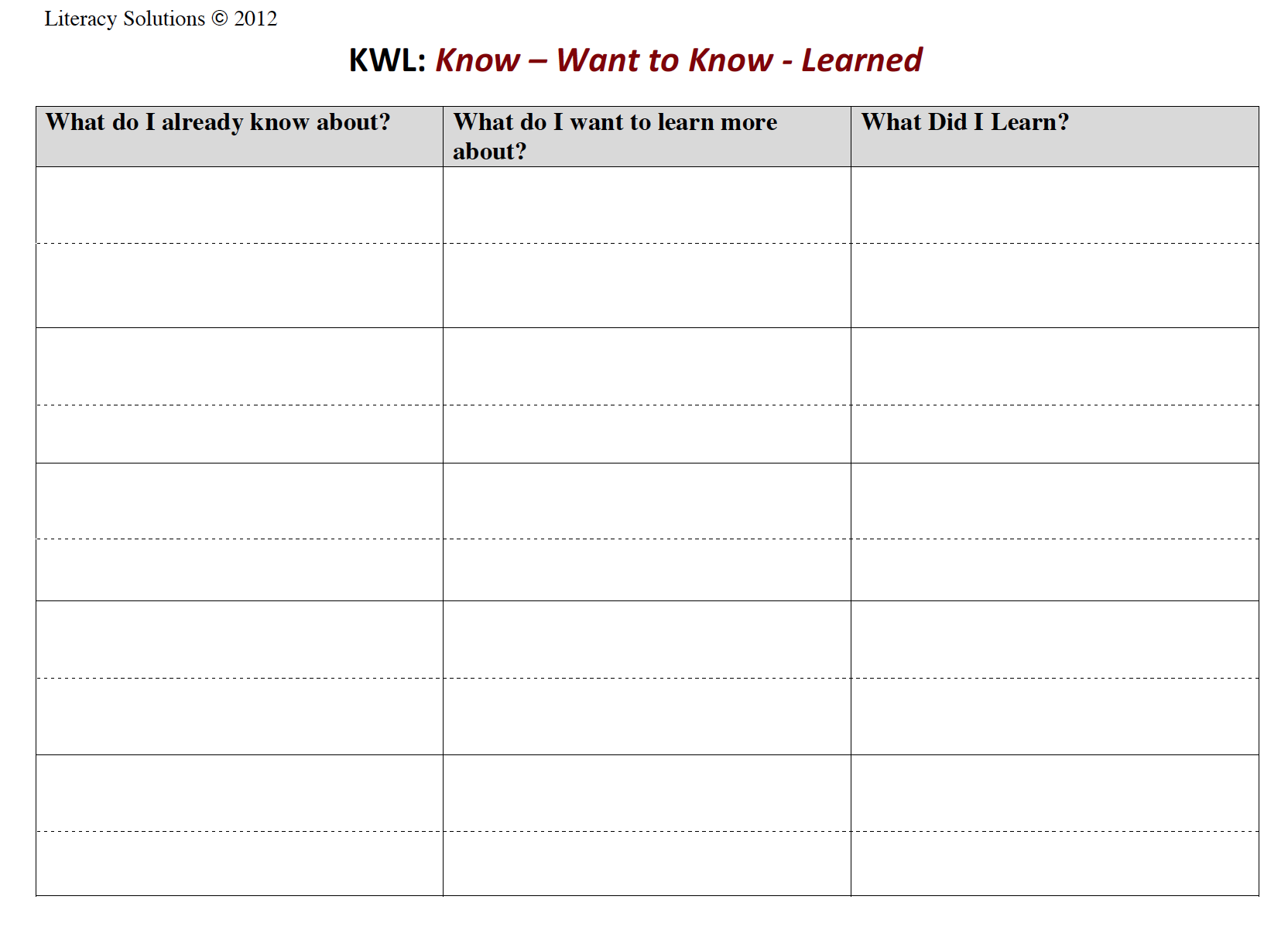
- Use diagnostic assessments to determine student readiness. These assessments can be formal or informal. Teachers can give pre-tests, question students about their background knowledge, or use KWL charts (charts that ask students to identify what they already Know, what they Want to know, and what they have Learned about a topic).
- Determine student interest. This can be done by using interest inventories and/or including students in the planning process. Teachers can ask students to tell them what specific interests they have in a particular topic, and then teachers can try to incorporate these interests into their lessons.
- Identify student learning styles and environmental preferences. Learning styles can be measured using learning style inventories. Teachers can also get information about student learning styles by asking students how they learn best and by observing student activities. Identifying environmental preferences includes determining whether students work best in large or small groups and what environmental factors might contribute to or inhibit student learning. For example, a student might need to be free from distraction or have extra lighting while he or she works.
Teachers incorporate different instructional strategies based on the assessed needs of their students. Throughout a unit of study, teachers should assess students on a regular basis. This assessment can be formal, but is often informal and can include taking anecdotal notes on student progress, examining students' work, and asking the student questions about his or her understanding of the topic. The results of the assessment could then be used to drive further instruction.
What does it look like for reading?
Differentiation strategies applied to reading can be designed to help students learn a range of skills including, phonics, comprehension, fluency, word prediction, and story prediction. The chart below offers a variety of strategies that can be used.
Strategy |
Focus of Differentiation |
Definition |
Example |
|---|---|---|---|
|
Tiered Assignments |
Readiness |
Tiered assignments are designed to instruct students on essential skills that are provided at different levels of complexity, abstractness, and open-endedness. The curricular content and objective(s) are the same, but the process and/or product are varied according to the student's level of readiness. |
Students with moderate comprehension skills are asked to create a story-web. Students with advanced comprehension skills are asked to re-tell a story from the point of view of the main character. |
|
Compacting |
Readiness |
Compacting is the process of adjusting instruction to account for prior student mastery of learning objectives. Compacting involves a three-step process:
|
A student who can decode words with short vowel sounds would not participate in a direct instruction lesson for that skill, but might be provided with small group or individualized instruction on a new phonics skill. |
|
Interest Centers or Interest Groups |
Readiness |
Interest centers (usually used with younger students) and interest groups (usually used with older students) are set up so that learning experiences are directed toward a specific learner interest. Allowing students to choose a topic can be motivating to them. |
Interest Centers: Centers can focus on specific reading skills, such as phonics or vocabulary, and provide examples and activities that center on a theme of interest, such as outer space or students' favorite cartoon characters. Interest Groups: For a book report, students can work in interest groups with other students who want to read the same book. |
|
Flexible Grouping* |
Readiness Interest Learning Profile |
Students work as part of many different groups depending on the task and/or content. Sometimes students are placed in groups based on readiness, other times they are placed based on interest and/or learning profile. Groups can either be assigned by the teacher or chosen by the students. Students can be assigned purposefully to a group or assigned randomly. This strategy allows students to work with a wide variety of peers and keeps them from being labeled as advanced or struggling. |
The teacher may assign groups based on readiness for phonics instruction, while allowing other students to choose their own groups for book reports, based on the book topic. |
|
Learning Contracts |
Readiness |
Learning contracts begin with an agreement between the teacher and the student. The teacher specifies the necessary skills expected to be learned by the student and the required components of the assignment, while the student identifies methods for completing the tasks. This strategy:
|
A student indicates that he or she wants to research a particular author. With support from the teacher, the student determines how the research will be conducted and how the information will be presented to the class. For example, the student might decide to write a paper and present a poster to the class. The learning contract indicates the dates by which each step of the project will be completed. |
|
Choice Boards |
Readiness Interest Learning Profile |
Choice boards are organizers that contain a variety of activities. Students can choose one or several activities to complete as they learn a skill or develop a product. Choice boards can be organized so that students are required to choose options that focus on several different skills. |
After students read Romeo and Juliet, they are given a choice board that contains a list of possible activities for each of the following learning styles: visual, auditory, kinesthetic, and tactile. Students must complete two activities from the board and must choose these activities from two different learning styles. |
* More information about grouping strategies can be found in Strategies to Improve Access to the General Education Curriculum. Available at http://www.k8accesscenter.org/training_resources/curricular_materials.asp
2. Fluency, Vocabulary, and Comprehension
E.D. Hirsch, Jr. (1988, 2003, 2007, 2013) writes extensively about comprehension, asserting that in order for students to comprehend, they must have core knowledge of words and of the world. Unfortunately, by the time  students get to the fourth grade, comprehension often declines among low socio-economic students. A struggle to introduce them to more challenging academic texts often ensues as a result. By grade four the fourth grade “slump” kicks in, referring to a drop-off in the reading scores of third and fourth graders when disadvantaged with poverty. While spelling and word meaning may fair well for them, by the time they get to grade four students’ scores dip significantly, and continue to decline as they advance in grades (Hirsch, 2003). Aside from what we know about comprehension dips, here is what else we know about how reading comprehension increases:
- Reading comprehension increases with reading fluency, allowing the mind to concentrate on meaning versus word pronunciation.
- Comprehension increases with vocabulary knowledge, thus facilitating reading willingness and engagement.
- Domain knowledge increases reading fluency, vocabulary, and deepens comprehension.
Thus, the Core Knowledge focus on fluency, vocabulary, and domain or content knowledge.
Fluency
Reading fluency is fast reading. Words flowing fast; while often not perfect fluency allows students to read and concentrate on meaning at the same time. Automaticity, or reading automatically, is an important process where readers can consciously attend to text with appropriate reading rate. Fluency is advanced with word knowledge because as word recognition is sped up, students read more fluently, thus freeing up more time, energy, or “reading muscle” to attend to the business of comprehension. Here are some fundamental principles that underlie the relationship between fluency and comprehension (Hirsch, 2003):
- Without quick decoding, the decoded word will be forgotten before it is understood. Speed and accuracy is important in decoding because it frees up working memory to focus on comprehension. It may take several years for a young reader to develop the kind of automaticity that allows for fluent reading and comprehension simultaneously, but is best supported with early training in reading fluency.
- To rapidly grasp meaning in academic text, students must rapidly identify words and their grammatical connections among them. Overcoming working memory can present the biggest challenge to this, however with practice and knowledge of writing genres, this basic level for understanding printed material can be overcome.
- Knowledge of content is increased with domain knowledge or larger idea chunks under small umbrellas of understanding. Domain knowledge is best facilitated by prior knowledge about a topic, which increases or speeds up comprehension thus leaving more room for working memory to understand and make sense of content by making connections, and comparing and contrasting ideas to develop deeper understanding. The ability to take in basic features, such as text knowledge, features, word knowledge, and reconcile this knowledge with what is already known about the content (prior knowledge) frees up cognition to understand and comprehend the more complex features of, and within, text as it is embedded in, and understood through, ensuing content.
- Breadth of vocabulary is crucial because strong and wide vocabulary knowledge correlates with reading comprehension and overall deeper understanding. Here is what we know about vocabulary:
Vocabulary
- Small, early vocabulary advantages, such as pre-teaching of vocabulary or front loading key vocabulary, grows into much larger understandings later, particularly advantageous to the disadvantaged student. Thus, accelerated reading and deep understanding.
- Low income students are at a disadvantage when it comes to vocabulary. Studies have shown that far fewer words are introduced to children in their early, formative language years (see Hart and Risley’s “The Early Catastrophe,” p. 4). In grade one for example, a high performing student will know twice as many words as a low a performing student. By grade 12 this will have quadrupled, with the high performing student knowing four times as many as the low (Hirsch, 2003).
- Knowing 90 t o 95 percent of the words we read in text facilitates main idea comprehension, thus supporting the remaining 5 to 10 percent left to be understood.
- Inferential processing of language is picked up through early childhood, thus vocabulary is sustained throughout the remainder of our lives.
- Vocabulary growth results from immersion in the language.
Domain Knowledge
Readers need to have a “threshold” of knowledge and understanding about a topic. This is domain knowledge. Domain knowledge helps readers make sense of words, word combinations, and multiple word connotations. In order to understand anything, we need a certain amount of background information about it. Baseball is an example, where understanding even the simplest of terms requires knowledge of playing baseball. Think about the key words of baseball: knocked, home run, base, etc. Inferring meaning, using context cues to understand newly encountered words and phrases combined with reading and listening all work into important inferences that result of domain knowledge.
Systematically teaching formal comprehension skills will help build a sustainable base to language and learning. However, Hirsch (2003) recommends that rather than spend time teaching formal comprehension skills such as classifying, predicting, looking for main ideas, the curriculum should spend less time on this and more time on systematically building word and world knowledge through immersion, taking learners to the next level of deep understanding and comprehension. The Core Knowledge materials retrieved through EngageNY will further this immersive process as it supports comprehensive, cross-curricular foundational skills and knowledge.
Reference
Hirsch, E.D. (2003). Reading Comprehension Requires Knowledge – of Words and the World. American Educator. Spring, 2003.
3. Prior Knowledge Guides
Below are the names of other pre-reading and prior knowledge guides that take students through a differentiated process. These materials can be found in the Course Objectives | Research | Materials folder at the beginning of this course.
Anticipation Guide
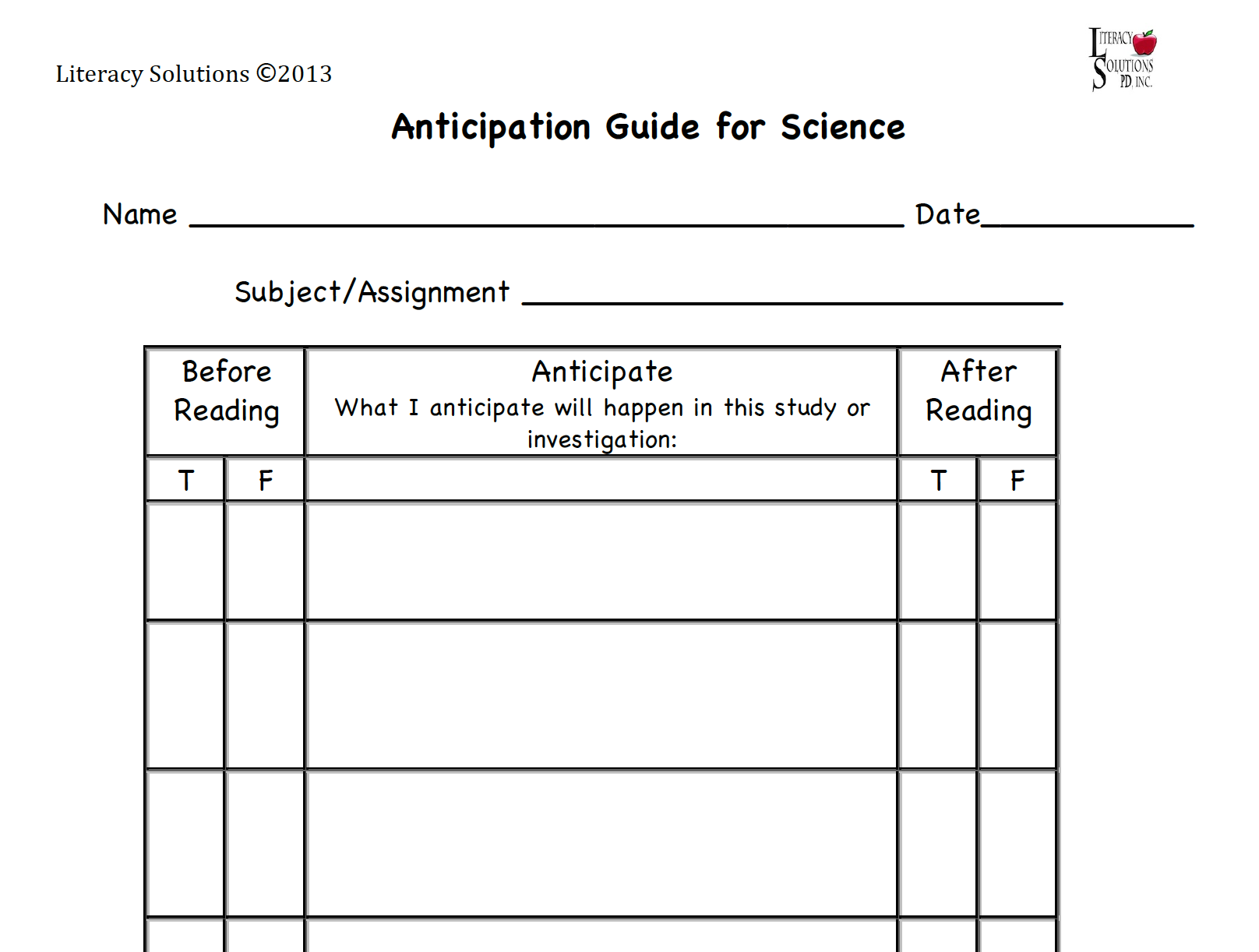
KWHL for Science: Know, Want to Know, how I'll learn it, Learned
KWL: Know, Want to Know, Learned
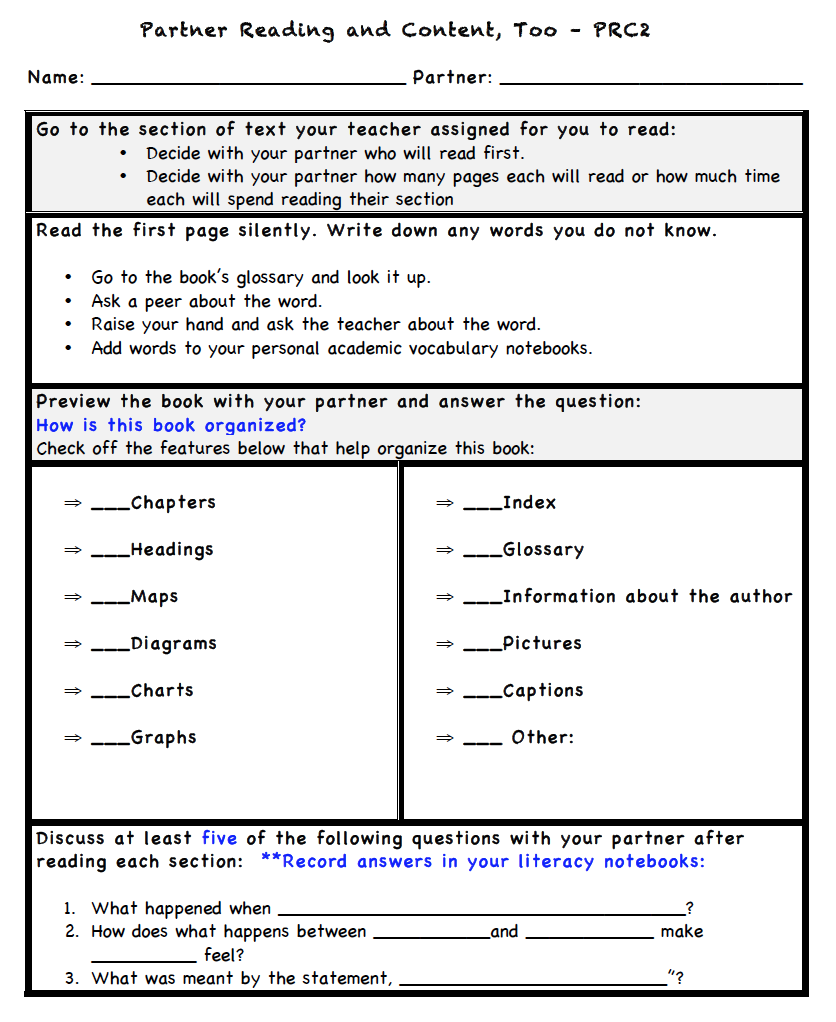
PRC2: Partner, Read, Content, Too
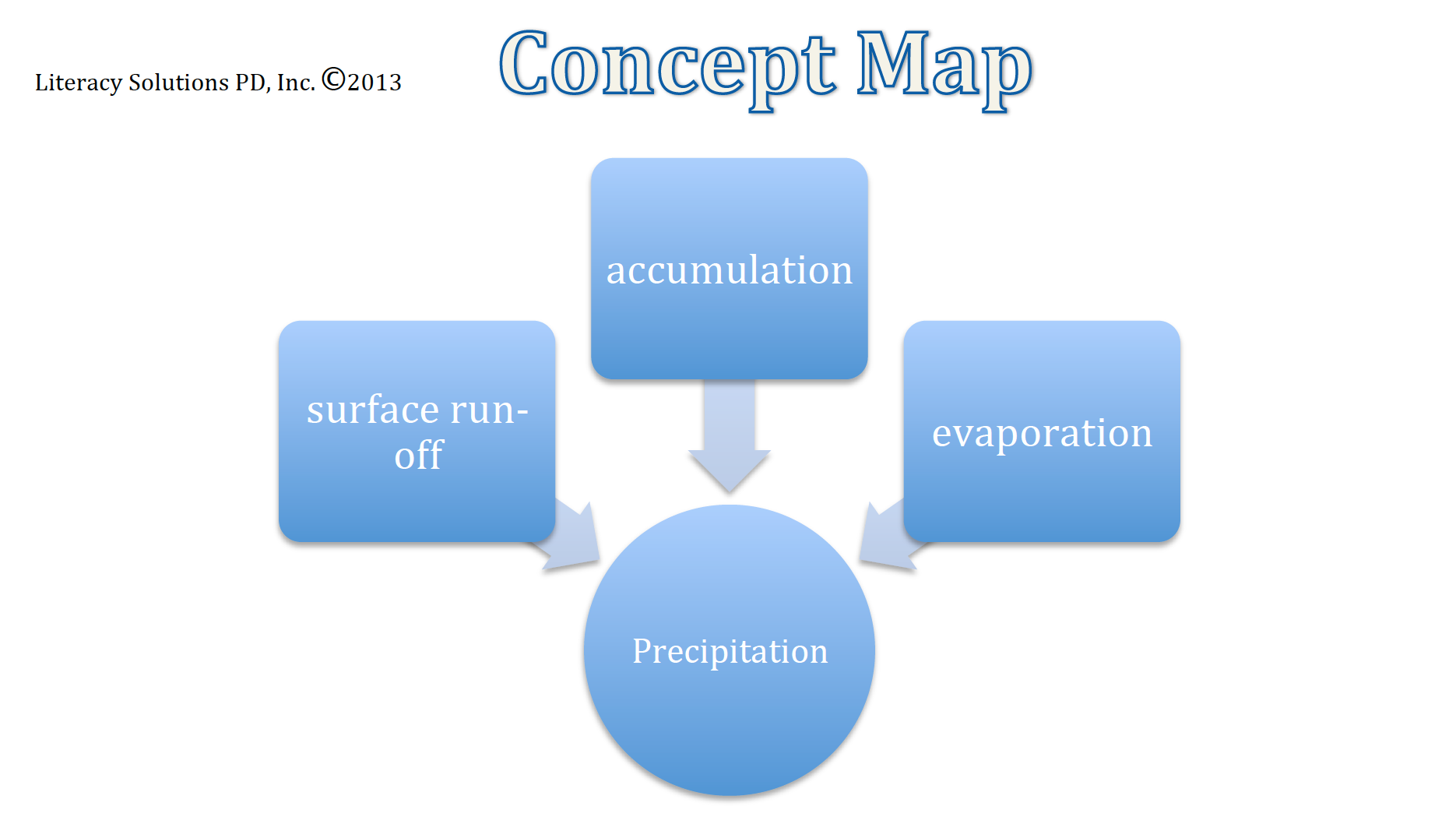
Concept Maps
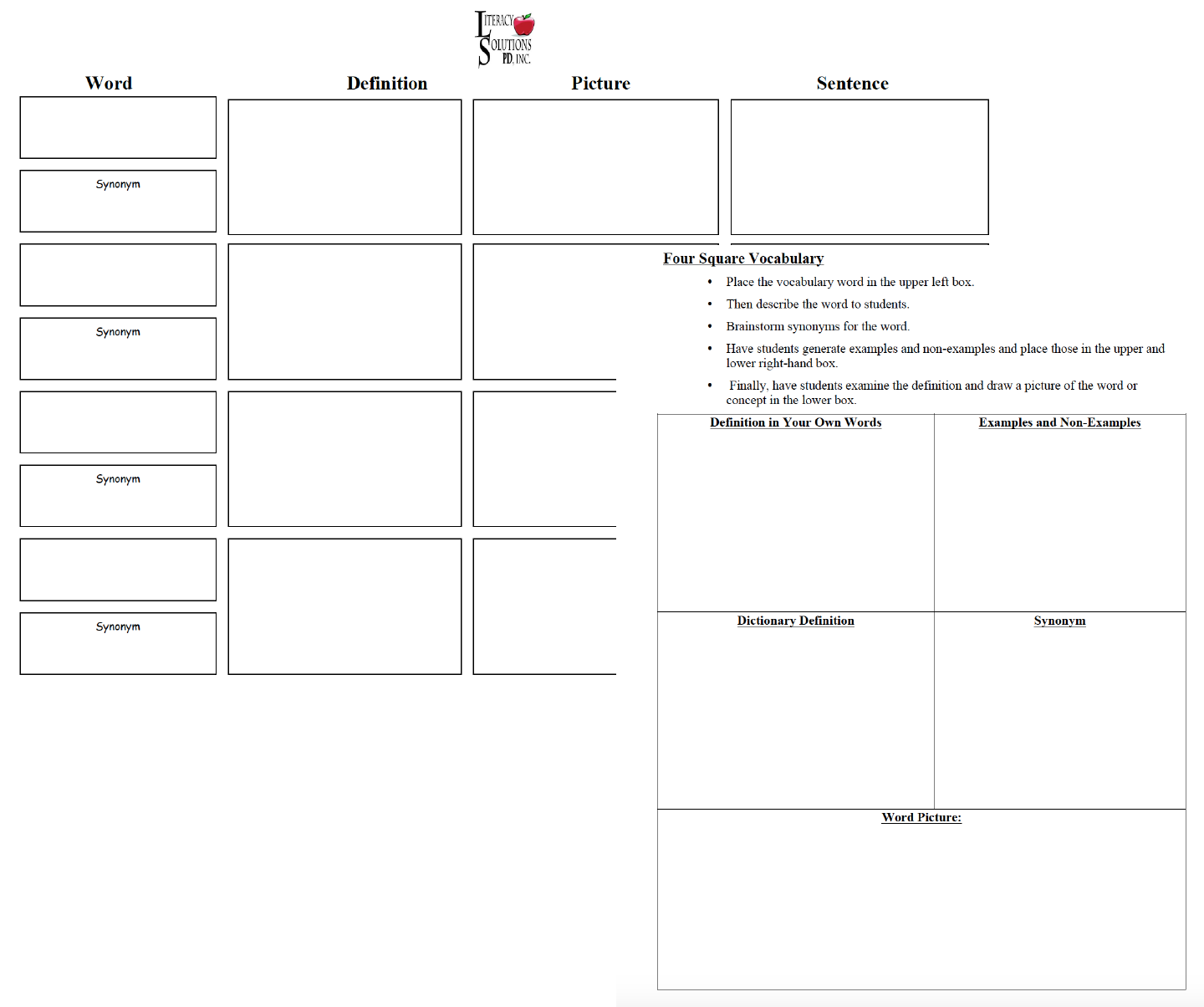
Vocabulary Guides: 4 Square, Context Clues