Grouping to Differentiate With ELLs in Mind
3. Grouping With Data
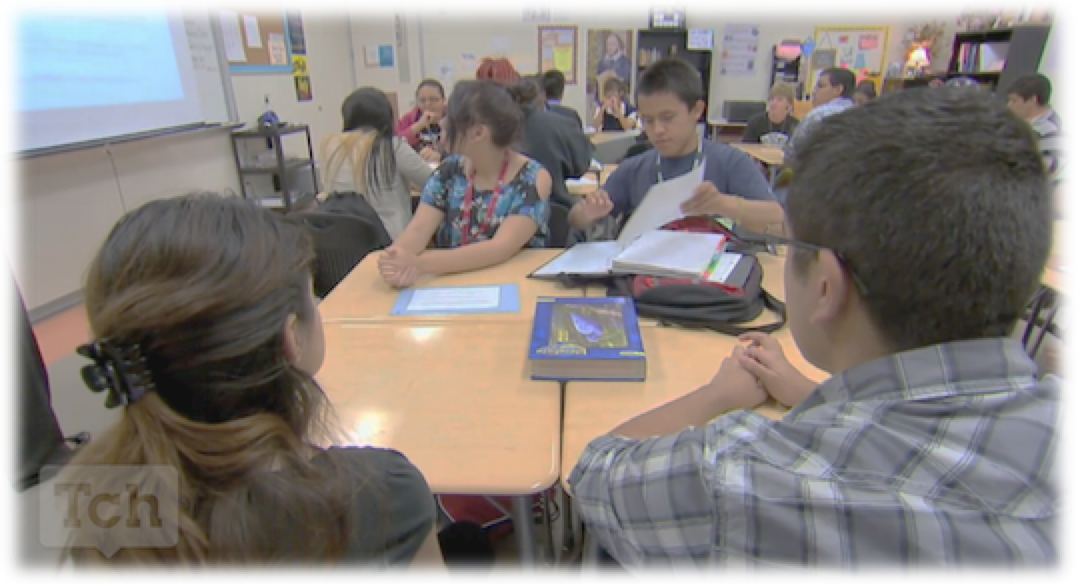
When grouping students, use formative assessment data to monitor progress with (Tomlinson, 2003; 2007). Formative assessment data used to differentiate instruction with can include the following:
- Anecdotal data gathered from reflective and collaborative activities, where students are communicating with one another while performing tasks, and completing activities. Teachers can use lists and charts to record this information on.
- Summaries and self-reflections where students articulate understanding, make sense of what they have read, make personal life connections through their own experiences, and communicate metacognitively about what they read through writing. Teachers look for content-specific language, and connections to and among concepts taught.
- Graphic organizers and strategy guides where students organize information, make connections among concepts and relationships by organizing their ideas into organizational templates. Reviewing these templates helps teachers understand the thinking process students' apply to arrive at answers and make sense of information with. It also communicates the thinking behind a final product, and to what extent that thinking was critical and analytical.
- Visual Representations of Information with students using visuals and pictures to connect ideas and remember information with. Noting visual information that students use to articulate understanding tells teachers what their learning style preferences are, and to what extent pictorial representations work into their overall ability to retain and make sense of information.
- Exit cards or exit sticky notes are useful formative assessment vehicles that articulate culminating understanding in follow-up to a lesson, or as preparation for review and background knowledge.
Differentiated Group Lesson Example
First 10 to 15 minutes of class:
- Lesson overview, mini-lesson, culling students for prior knowledge via a class interactive KWL (Know, Want to know, Learn) or discussion focused on prior knowledge related to the upcoming lesson or content.
- Students participate in a teacher-led lesson with the same content but differentiated instructional pacing or scaffolded support specific to students' needs. For example, some students might draw out their ideas and caption them. Others may write short responses.
- Other students work in pre-assigned groups for independent study or on assigned cooperative learning/collaborative tasks with peer partners.
- Students may be in different places, with some reviewing work from previouos tasks and making adjustments, others engaging in peer review for editing and revision, some conferring with the teacher in a teacher-led group, and others working ahead of on scaffolded activities to catch up.
- Students work to complete assignments at staggered times and work effectively at different places within the same assignment with varying start and finish times.
More Considerations for Grouping
Develop peer leaders for each group and rotate this role so that all, or most, have an opportunity to experience peer leadership:
- Develop problem solvers in a similar way, jigsawing this opportunity for all students.
- Consider grouping for endurance levels, integrating high energy students with lower energy for a healthy mix of group synergy.
- Consider background experience and other languages spoken when making placement decisions.
- Consider cognitive abilities, but do not base groups solely using cognitive criteria.
- Consider creative and artistic talents when placing students in groups.
- Keep varied levels of expectations for task completion; allow students to finish and start at various times that coincide with their abilities, passion for the project, and time needed overall for completion.
- Create environments where all learners can experience some type of success.
- Use and make available reading and resource materials at multiple reading levels throughout multiple genre, such as pairing themes with fiction and non-fiction for example.
- Use small groups to re-teach those in need of re-teaching.
Small groups were found to be as successful as one-on-one conferences (Greenwood, et al., 2003 in: Tobin & McInnes, 2008), particularly when instruction was focused on addressing phonics, decoding, and fluency in reading. When placing students in early reading groups consider the following:
- Flexile grouping
- Ongoing assessment and progress monitoring
- Multiple text availability at various reading levels
- Intensive one-to-one instruction in word-study with repeated readings to build fluency
- Group guided reading practice with a focus on student engagement
- In-class coaching and modeling of differentiated strategies for teachers