Grouping to Differentiate With ELLs in Mind
2. Small and Flexible Groups
Small and Flexible Groups
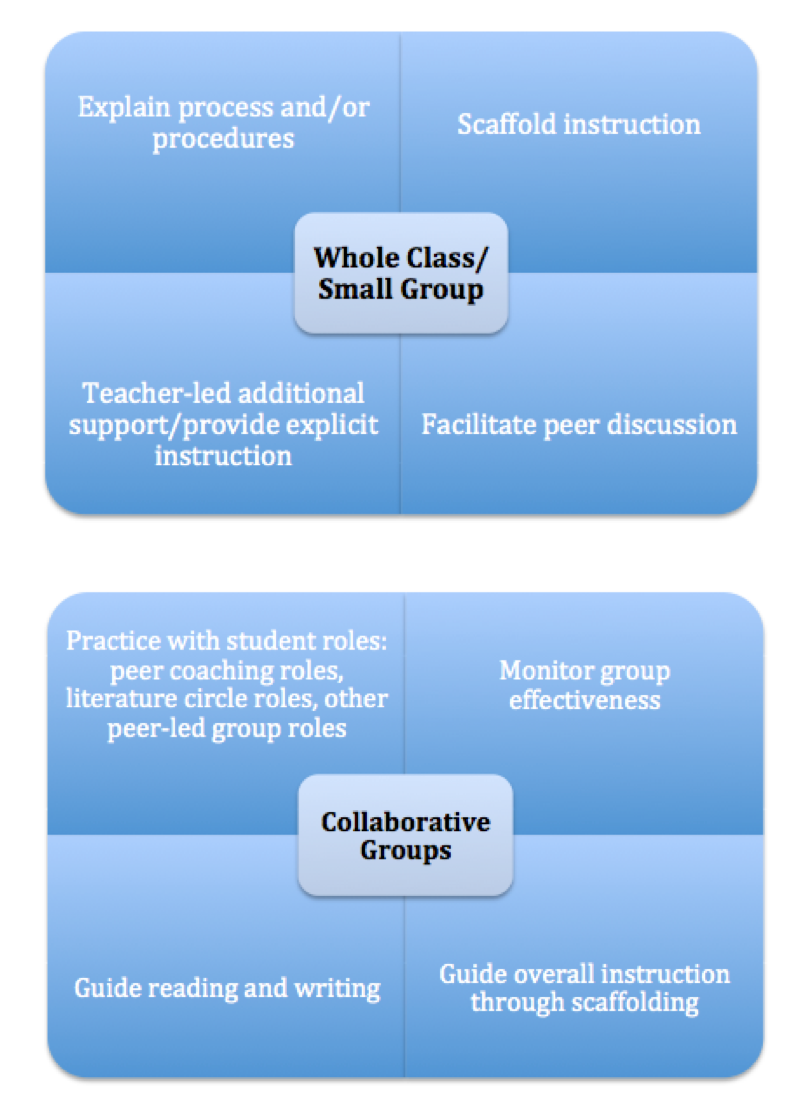
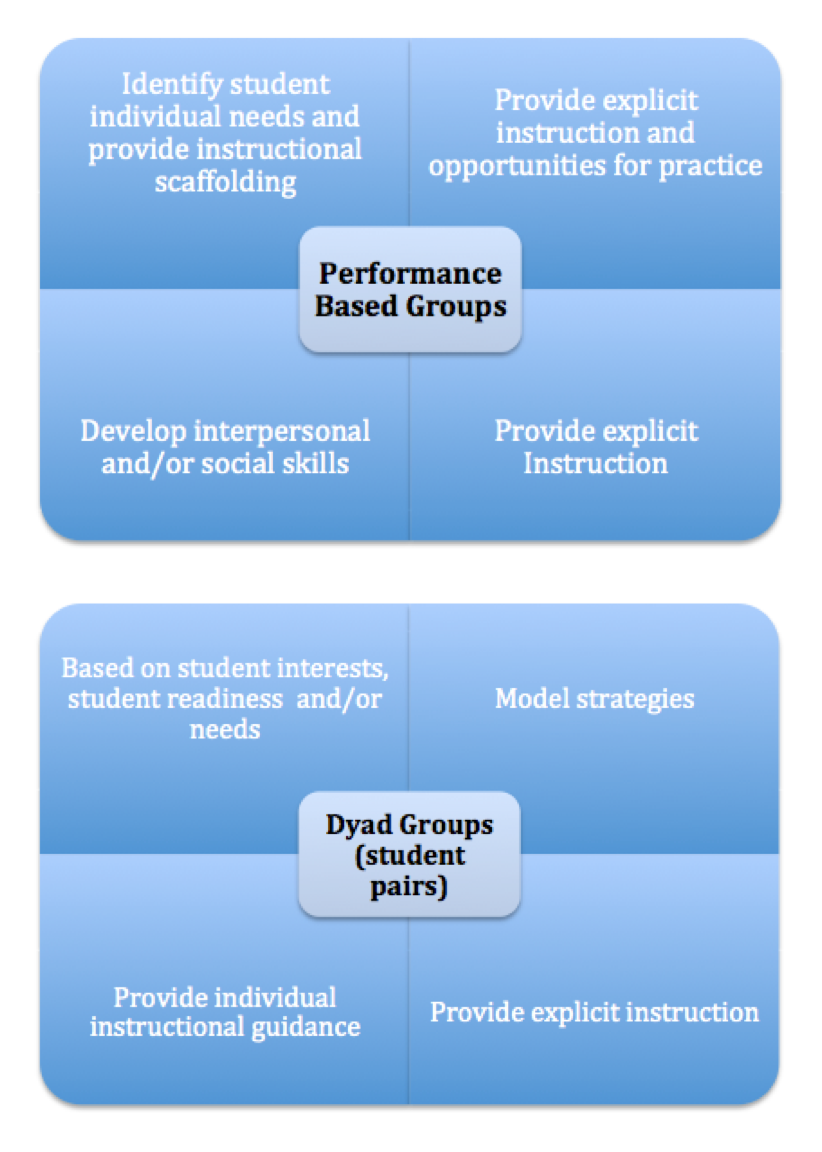
 Teachers can organize and facilitate groups based on student readiness in response to diverse learning needs through scaffolding applied best in small groups. Students would therefore be placed with materials that are at their own level of functioning, offering support to help them achieve a learning standard or master a specific skill. Students who perform at or above grade level might also need small and flexible grouping in order to allow them opportunities to challenge or expand on activities. Decisions for small groups are typically made in the following instances:
- When some students need additional instruction or time on task
- Students need additional support, help or scaffolding
- Higher performing students need prep time or need extension activities for independent learning
- Students have specific interests or need to make selections for assignments to result in group placement
- Learning style inventories indicate specific learning preferences for challenging tasks. Small grouping allows for students to be placed within activities that accommodate learning styles and thus allow for enhanced learning and success.
Marzano's Informal, Formal, and Base Groups
Marzano (2001) recommends that cooperative learning groups be used as a base for instruction. Base groups can be organized by grouping patterns that include the following:
Informal groups: pair-share, turn-and-talk groups that last a few minutes and are used to scaffold, reflect within a lesson about a lesson. These groups focus student attention while allowing them to more deeply process information through focused peer discussion.
Formal groups are longer term groups that allow students time to thoroughly process information, complete assignments and performance tasks. These are planned in advance to achieve positive interdependence among students, collaborative processing of information, reinforcement of social skills, and group accountability. Formal groups can include:
- assignment completion
- project planning
- project completion
- peer conferences
- student peer coaching
Base groups are the longest term groups that allow students time to follow through on throughout the school year with the same peers. They can be used to accomplish routine tasks, provide on-going support, progress monitor, and complete collaborative long-term activities. Activities in base groups can include:
- routine tasks
- planned activities
- running of errands
- five minute meetings to greet and meet, check in, or sign up for various activities, review homework, help with classroom chores
Other Grouping Possibilities: