Building Reading Fluency of ELLs
2. Fluency, Vocabulary, and Comprehension
E.D. Hirsch, Jr. (1988, 2003, 2007, 2013) writes extensively about comprehension, asserting that in order for students to comprehend, they must have core knowledge of words and of the world. Unfortunately, by the time 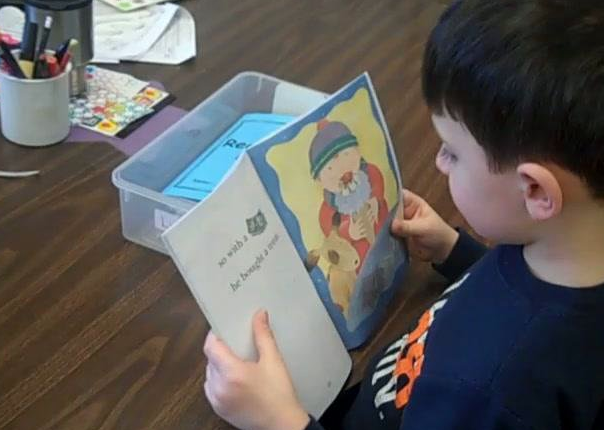 students get to the fourth grade, comprehension often declines among low socio-economic students. A struggle to introduce them to more challenging academic texts often ensues as a result. By grade four the fourth grade “slump” kicks in, referring to a drop-off in the reading scores of third and fourth graders when disadvantaged with poverty. While spelling and word meaning may fair well for them, by the time they get to grade four students’ scores dip significantly, and continue to decline as they advance in grades (Hirsch, 2003). Aside from what we know about comprehension dips, here is what else we know about how reading comprehension increases:
- Reading comprehension increases with reading fluency, allowing the mind to concentrate on meaning versus word pronunciation.
- Comprehension increases with vocabulary knowledge, thus facilitating reading willingness and engagement.
- Domain knowledge increases reading fluency, vocabulary, and deepens comprehension.
Thus, the Core Knowledge focus on fluency, vocabulary, and domain or content knowledge.
Fluency
Reading fluency is fast reading. Words flowing fast; while often not perfect fluency allows students to read and concentrate on meaning at the same time. Automaticity, or reading automatically, is an important process where readers can consciously attend to text with appropriate reading rate. Fluency is advanced with word knowledge because as word recognition is sped up, students read more fluently, thus freeing up more time, energy, or “reading muscle” to attend to the business of comprehension. Here are some fundamental principles that underlie the relationship between fluency and comprehension (Hirsch, 2003):
- Without quick decoding, the decoded word will be forgotten before it is understood. Speed and accuracy is important in decoding because it frees up working memory to focus on comprehension. It may take several years for a young reader to develop the kind of automaticity that allows for fluent reading and comprehension simultaneously, but is best supported with early training in reading fluency.
- To rapidly grasp meaning in academic text, students must rapidly identify words and their grammatical connections among them. Overcoming working memory can present the biggest challenge to this, however with practice and knowledge of writing genres, this basic level for understanding printed material can be overcome.
- Knowledge of content is increased with domain knowledge or larger idea chunks under small umbrellas of understanding. Domain knowledge is best facilitated by prior knowledge about a topic, which increases or speeds up comprehension thus leaving more room for working memory to understand and make sense of content by making connections, and comparing and contrasting ideas to develop deeper understanding. The ability to take in basic features, such as text knowledge, features, word knowledge, and reconcile this knowledge with what is already known about the content (prior knowledge) frees up cognition to understand and comprehend the more complex features of, and within, text as it is embedded in, and understood through, ensuing content.
- Breadth of vocabulary is crucial because strong and wide vocabulary knowledge correlates with reading comprehension and overall deeper understanding. Here is what we know about vocabulary:
Vocabulary
- Small, early vocabulary advantages, such as pre-teaching of vocabulary or front loading key vocabulary, grows into much larger understandings later, particularly advantageous to the disadvantaged student. Thus, accelerated reading and deep understanding.
- Low income students are at a disadvantage when it comes to vocabulary. Studies have shown that far fewer words are introduced to children in their early, formative language years (see Hart and Risley’s “The Early Catastrophe,” p. 4). In grade one for example, a high performing student will know twice as many words as a low a performing student. By grade 12 this will have quadrupled, with the high performing student knowing four times as many as the low (Hirsch, 2003).
- Knowing 90 t o 95 percent of the words we read in text facilitates main idea comprehension, thus supporting the remaining 5 to 10 percent left to be understood.
- Inferential processing of language is picked up through early childhood, thus vocabulary is sustained throughout the remainder of our lives.
- Vocabulary growth results from immersion in the language.
Domain Knowledge
Readers need to have a “threshold” of knowledge and understanding about a topic. This is domain knowledge. Domain knowledge helps readers make sense of words, word combinations, and multiple word connotations. In order to understand anything, we need a certain amount of background information about it. Baseball is an example, where understanding even the simplest of terms requires knowledge of playing baseball. Think about the key words of baseball: knocked, home run, base, etc. Inferring meaning, using context cues to understand newly encountered words and phrases combined with reading and listening all work into important inferences that result of domain knowledge.
Systematically teaching formal comprehension skills will help build a sustainable base to language and learning. However, Hirsch (2003) recommends that rather than spend time teaching formal comprehension skills such as classifying, predicting, looking for main ideas, the curriculum should spend less time on this and more time on systematically building word and world knowledge through immersion, taking learners to the next level of deep understanding and comprehension. The Core Knowledge materials retrieved through EngageNY will further this immersive process as it supports comprehensive, cross-curricular foundational skills and knowledge.
Reference
Hirsch, E.D. (2003). Reading Comprehension Requires Knowledge – of Words and the World. American Educator. Spring, 2003.