Differentiating With Data
1. Learner Profile Data
Learner Profiles
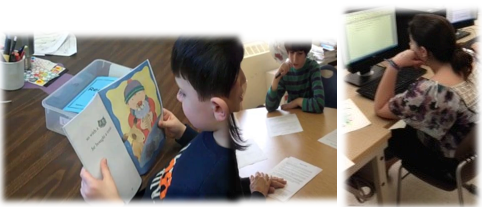
Differentiating instruction also involves purposefully gathering and organizing data to create individual student learning profiles with. We administer these profiles in order to get to know our learners better, which then allows us to plan instruction and hence: differentiate. Learning profiles help us understand our students’ multiple intelligence strengths, their learning styles, what prior knowledge they have about a subject, what they’re interested in, how ready they are to learn something, what they are most challenged by, and what their learning limitations are if any.
How do we get this data? A number of ways:
- Standardized test scores
- Reading inventories
- Concepts inventories
- Learning style Inventories
- Writing samples
- Multiple intelligences checklist
- All About Me surveys
- Parent/home surveys and language surveys
- IEPs
Grouping students is part of differentiating, but not always necessary. When it is, group students using formative assessment data. Here are some considerations for grouping:
Who the leaders are Who the problem solvers are Gender Energy Levels
Backgrounds and interests Strengths
Creativity Artistic interests
When students become personally and intellectually engaged, they are more motivated to learn because their emotions become involved. They are mind-active rather than mind-passive (Erickson 2001)
- Emphasize meaningful, relevant, and worthwhile content to motivate and challenge
- Engage importance by teaching specific areas in depth rather than broad, general concepts
- Adjust curriculum to match and accommodate students’ readiness levels or -
Vary the Process:
- Include diverse reflection activities to build long-term retention
- Use journal entries, drawings, organizers, questions, exit cards
- Orchestrate frequent opportunities for choice
- Use available technology resources to gather and integrate information
Of utmost importance to differentiated curriculum, is that we vary the content, the process, the product, and the assessment (Tomlinson, 2003; 2008; 2010; Wolfe, 2001). Below are some examples of what this would look like in planning:
|
Content |
Process |
Product |
Assessment |
|
Language Arts
|
Students discuss poetic conventions and analyze classic poetry for meaning. Students write their own poetry, act it out and read it aloud to peers for feedback. |
Student biographical poems Acrostic poetry using names and personal attributes Performance poetry |
Poetry rubric Self-assessment rubric Peer evaluation rubric Portfolios |
|
Mathematics |
Students explore 3-dimensional materials, describe shapes, sorting and classifying, identifying and labeling, interactive writing |
· Definitions, descriptions and process posted throughout the room · Shape stories created with new vocabulary and illustrations that depict concepts |
Standardized tests Tiered questioning Shape stories |
There are also cognitive concepts that work into why and how we differentiate, of which we will expand upon later in this course.